Kitchen Sink and Faucet Guide: Undermount, Workstation, Farmhouse, Sizes and 2026 Cost
How to choose a kitchen sink and faucet for a NJ house or NYC apartment: undermount vs farmhouse vs workstation, stainless vs fireclay vs granite composite, sizes, disposals, flow limits and 2026 planning costs.
Short answer
For most NJ and NYC kitchens the best all-round choice is an undermount 16- or 18-gauge stainless sink, 30–33 inches wide, in a 33–36 inch sink base, paired with a pull-down faucet. Fireclay farmhouse sinks and workstation sinks are worth it when the cabinet plan is designed around them from the start. In 2026, plan roughly $400–$4,000 for the sink and $250–$1,500 for the faucet, plus plumbing labor; the sink must be chosen before the countertop is templated.
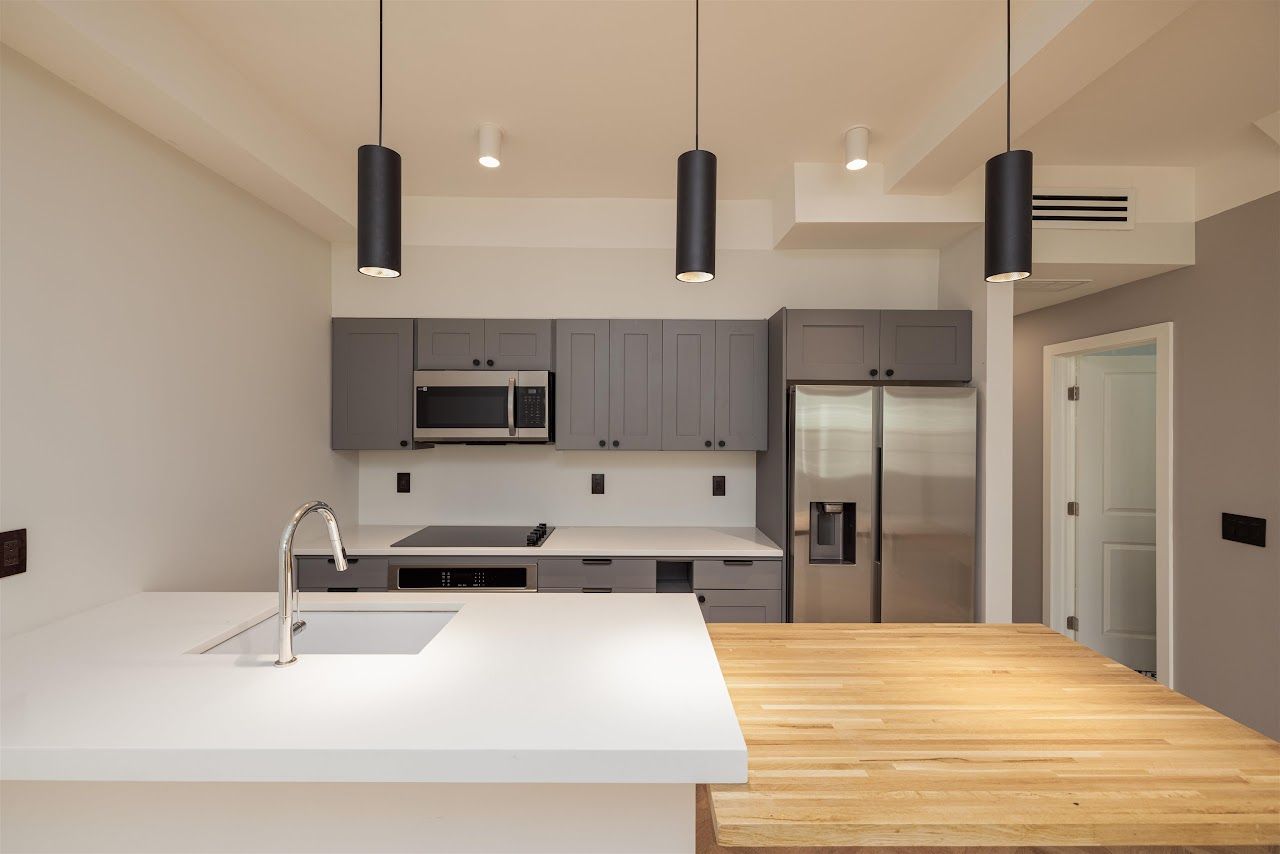
Choose the sink before the cabinets and counter
The sink is one of the few kitchen items that three trades depend on. The cabinet maker sizes the sink base to it, the countertop fabricator cuts the opening from the sink’s template, and the plumber sets the drain and supply heights for it. Homeowners who pick a sink after the cabinets are ordered usually end up with a smaller bowl than they wanted, or a farmhouse sink that does not fit the base. Put the sink, faucet and any disposal on the selection list that goes to the cabinet designer, alongside the items in our kitchen renovation planning checklist.
Mounting styles
| Style | How it sits | Good for | Watch for |
|---|---|---|---|
| Undermount | Clipped or epoxied under a stone or quartz counter | Easy wiping from counter into bowl; the default with stone | Not suitable for laminate; must be well supported |
| Drop-in (top-mount) | Rim sits on top of the counter | Laminate counters, budget refreshes, replacing a sink without new counters | Rim collects grime; looks dated with stone |
| Farmhouse (apron-front) | Exposed front panel replaces the cabinet face | Traditional and transitional kitchens, large pots | Needs a dedicated apron sink base; heavy fireclay needs support framing |
| Integrated | Formed from the same material as the counter | Seamless modern look with solid surface or some stone | Hard to replace a damaged bowl without replacing the counter |
| Workstation | Undermount or apron sink with a ledge for sliding boards, racks and colanders | Small kitchens that need extra prep surface | Accessories must be stored; ledge raises cost |
Materials compared
| Material | Strengths | Weaknesses | 2026 sink-only planning range* |
|---|---|---|---|
| Stainless steel (16–18 gauge) | Forgiving, light, resists chips; lower gauge is thicker | Scratches (less visible with brushed finish); noisy without sound pads | $400 – $1,800 |
| Fireclay | Glossy, classic farmhouse look, very hard surface | Heavy; can chip from dropped cast iron; few sizes | $900 – $3,000 |
| Enameled cast iron | Durable, quiet, traditional | Very heavy; enamel can chip | $700 – $2,500 |
| Granite or quartz composite | Matte colors, hides scratches and water spots | Can be damaged by extreme heat shock; dark colors show mineral residue | $500 – $1,800 |
| Workstation stainless with accessories | Adds prep space in tight kitchens | Higher cost; accessories need cleaning and storage | $1,200 – $4,000 |
*Sink only, not installation, faucet or countertop cut-out. These are planning ranges, not quotes.
Size and bowl configuration
- Width: a 30–33 inch single bowl fits a sheet pan and a stock pot and suits most kitchens. In a small NYC galley, a 24–27 inch bowl often leaves more usable counter, which matters more than bowl size.
- Cabinet base: manufacturers list a minimum sink base for each model, typically 3 inches wider than an undermount bowl. Check it before the cabinet order.
- Depth: 9–10 inches is the common sweet spot. Deeper bowls hide dishes but are harder on the back, especially for shorter cooks.
- Single vs double bowl: most renovations now choose a large single bowl. A double bowl (or a low-divide bowl) helps households that hand-wash and rinse separately.
- Drain position: an offset rear drain frees space under the sink for a trash pull-out or water filter and keeps the drain out from under stacked dishes.
Faucets: what actually matters
- Spout height and reach: measure against the bowl. A tall spout over a shallow bowl splashes; a short reach misses the center of a large bowl. Check clearance to any window or shelf behind the sink.
- Pull-down vs pull-out: pull-down sprayers suit deep single bowls; pull-out suits lower spouts and window locations.
- Valve and finish: ceramic-disc cartridges are the norm. PVD finishes (often sold as brushed brass, nickel or black “stainless”) resist wear better than plain plated finishes.
- Holes: decide on one-hole or a faucet with separate sprayer, soap dispenser, filtered-water tap or air switch before the fabricator drills the counter. Extra holes cannot be added easily later.
- Touchless and smart faucets need a power source under the sink (batteries or a receptacle) and are worth it mainly for heavy cooks.
Federal standards cap new kitchen faucets at 2.2 gallons per minute measured at 60 psi. EPA’s WaterSense label currently covers bathroom faucets, not kitchen faucets, so a kitchen faucet’s efficiency is mostly about its aerator and spray modes.
Disposals, filters and hot water
Garbage disposals: residential in-sink food waste disposers have been legal in New York City since 1997. Installation is plumbing and electrical work done by licensed trades, and many co-ops and condos set their own rules, so check the alteration agreement or house rules first. In New Jersey, disposals are common in houses; homes on septic systems should confirm the septic design can handle the extra solids.
Under-sink equipment: a disposal, reverse-osmosis filter, instant-hot tank and trash pull-out all compete for one cabinet. Lay them out together. A disposal and an instant-hot dispenser each typically need a receptacle or a dedicated circuit under the sink, which your electrician includes in the rough-in.
Dishwasher connection: the dishwasher normally sits next to the sink and drains through the sink’s tailpiece or the disposal, with an air gap or high loop depending on the local plumbing code and inspector. Placing the dishwasher on the side of the sink nearest the dish storage saves steps.
Plumbing and permits
Replacing a sink and faucet in the same location is usually ordinary repair work. Moving the sink, for example to an island, is a different job: it means new drain and vent piping, which often requires a plumbing permit in New Jersey under the state’s plumbing subcode and a Licensed Master Plumber with a DOB filing in New York City. An island sink also needs a venting solution the inspector accepts. In apartments, how far the sink can move depends on the building’s risers and slab; see our kitchen layout guide for the planning side.
Does the sink affect resale value?
Buyers rarely pay for a particular sink, but they notice a dated drop-in sink with a stone counter, a chipped enamel bowl or a dripping faucet in listing photos. A well-sized undermount sink and a quality faucet are inexpensive relative to the whole kitchen and help a renovated kitchen read as finished. For how kitchen work affects sale prices more broadly, see our guide to kitchen renovation and home value.
Installation sequence
- Select sink, faucet and accessories; send specifications to the cabinet designer and fabricator.
- Plumbing rough-in at the planned drain and supply heights (new or relocated sinks).
- Cabinets installed; undermount sinks are often delivered to the fabricator so the cut-out matches exactly.
- Countertop templated, fabricated and installed with the sink.
- Faucet, disposal, dishwasher and filters connected; plumbing inspection where a permit applies.
Planning a kitchen renovation in Jersey City, Hoboken or Manhattan? BDM coordinates the sink, cabinet base, countertop and plumbing so the pieces fit the first time. Start with a short brief on our project intake page.
Frequently asked questions
What is the best kitchen sink for a quartz or granite countertop?
An undermount sink is the usual choice with stone or quartz because you can wipe crumbs straight from the counter into the bowl. Stainless steel is the most forgiving material; fireclay and composite are good alternatives for a specific look.
How much does a kitchen sink and faucet cost in NJ or NYC?
In 2026, plan roughly $400–$4,000 for the sink and $250–$1,500 for the faucet, plus plumbing labor. Moving the sink to a new location adds drain, vent and permit costs. These are planning ranges, not quotes.
Are garbage disposals allowed in NYC apartments?
Residential food waste disposers have been legal in New York City since 1997, installed by licensed trades. Many co-ops and condos set their own rules, so check your building’s alteration agreement or house rules before buying one.
What size kitchen sink do I need?
A 30–33 inch single bowl suits most kitchens and fits sheet pans and stock pots. In small apartment kitchens, a 24–27 inch bowl often leaves more useful counter space. Check the manufacturer’s minimum sink base before ordering cabinets.
Do I need a permit to move my kitchen sink?
Moving a sink means new drain and vent piping, which often requires a plumbing permit in New Jersey and a Licensed Master Plumber with a DOB filing in New York City. Replacing a sink in the same spot is usually ordinary repair work.
Sources & further reading
- 10 CFR 430.32: federal water conservation standards for faucets
- US EPA WaterSense: bathroom faucets (scope of the label)
- NYC DDC Town+Gown: Modernizing Organics Collection Using Food Waste Disposals
- N.J.A.C. 5:23-3.15: New Jersey plumbing subcode
- NYC Department of Buildings: License types
Costs are 2026 planning ranges for the New Jersey and New York City market, not quotes. Rules summarized here change and vary by building and municipality; confirm requirements with your local building department, building management or attorney before you start.