Kitchen Cabinets: Stock vs Semi-Custom vs Custom, Cost, Quality and Lead Times
How stock, semi-custom and custom kitchen cabinets differ in cost, construction, sizes and lead times, which to choose for a New Jersey house or NYC apartment, and what to check in any cabinet quote.
Short answer
Stock cabinets come in fixed sizes and finishes and ship in days to a few weeks; semi-custom lines offer more sizes, depths and finishes in about 4–10 weeks; custom cabinets are built to the exact room, usually in 8–16 weeks. As 2026 planning figures for a typical 10-by-12-foot kitchen, expect roughly $8,000–$20,000 for stock, $18,000–$40,000 for semi-custom and $35,000–$80,000+ for custom, installed. Semi-custom suits most kitchens; custom earns its cost in old buildings with crooked walls and odd dimensions.
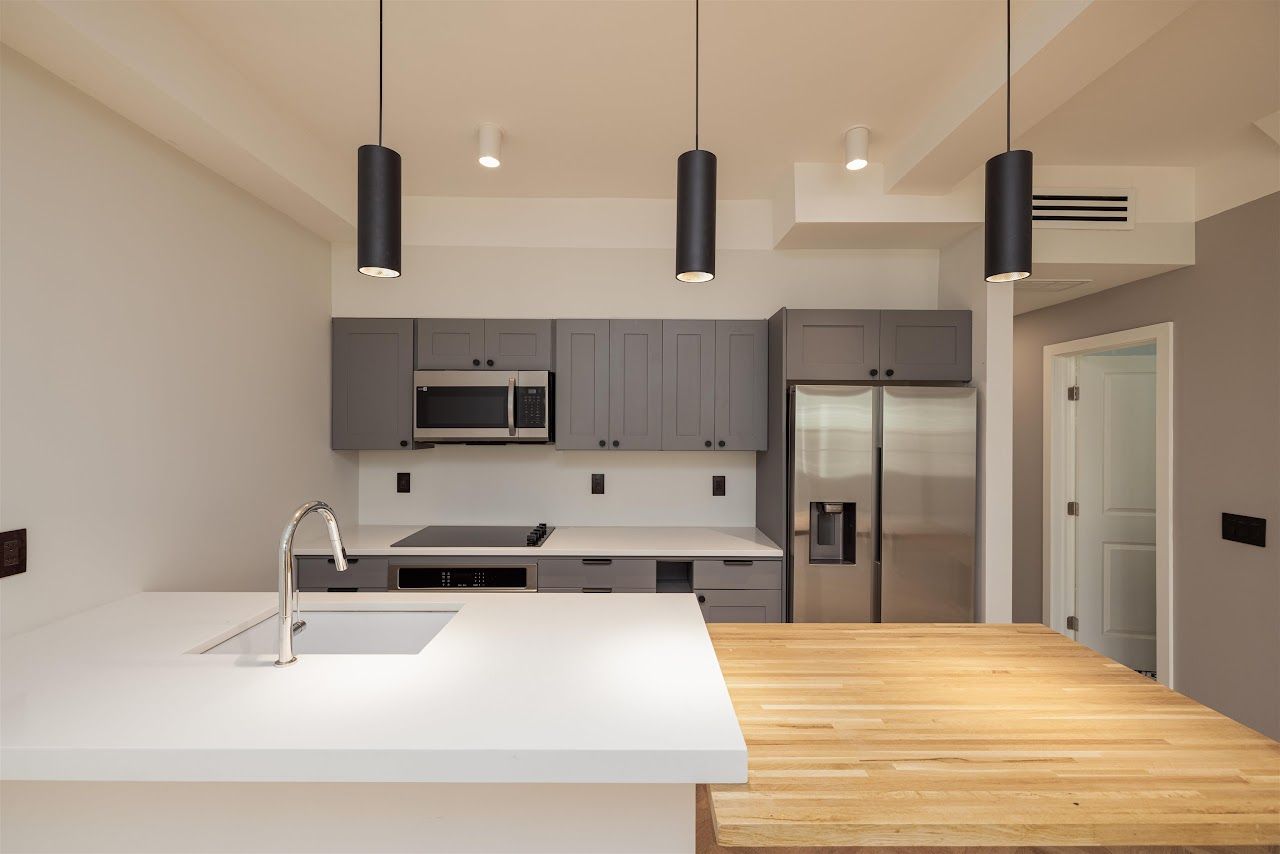
What the three categories actually mean
The labels describe how much the manufacturer adapts to your room, not quality. There are well-built stock cabinets and poorly built custom ones.
| Stock | Semi-custom | Custom | |
|---|---|---|---|
| Sizes | 3-inch width increments, standard depths and heights | Wider range; modified depths and heights at extra cost | Any dimension |
| Finishes | A handful of door styles and colors | Dozens of styles, paint and stain colors, sometimes custom color match | Unlimited, including veneers, lacquers and inset doors |
| Typical lead time (2026) | In stock to ~3 weeks | ~4–10 weeks | ~8–16 weeks |
| Installed cost, 10×12 kitchen (2026 planning) | $8,000 – $20,000 | $18,000 – $40,000 | $35,000 – $80,000+ |
| Filler strips | Many, to close gaps | Fewer | Few or none |
Planning ranges, not quotes. Cabinet cost depends heavily on the number of drawers, accessories, finish and installation complexity. Ranges include delivery and installation, not countertops.
Construction details that matter more than the label
Box material
Plywood boxes hold screws better and tolerate a small leak under a sink better than particleboard. Good furniture-board or MDF boxes can be perfectly serviceable in dry locations. Ask for plywood at least for the sink base.
Framed vs frameless
Framed cabinets have a face frame around the opening; they are traditional and forgiving to install. Frameless (European) cabinets give slightly more usable interior space and a cleaner modern look, and suit flat-panel doors. Inset doors, which sit flush within the frame, are the most expensive and need precise installation and stable humidity.
Drawers and hardware
Full-extension, soft-close undermount slides and dovetailed or well-joined drawer boxes are where daily use is felt. A kitchen with more drawers and fewer doors costs more but works better, especially in base cabinets.
Finish
Factory-applied catalyzed finishes are more durable than site-applied paint. Painted doors will show hairline cracks at joints over time as wood moves; that is normal for painted wood, less so for painted MDF center panels.
Formaldehyde compliance
Under EPA rules (TSCA Title VI), hardwood plywood, MDF and particleboard sold in the United States, and finished goods containing them, must be certified as meeting formaldehyde emission standards, and composite wood products must be labeled TSCA Title VI compliant. Reputable cabinet makers can document this; ask for it if you are buying imported or unbranded cabinets.
Which to choose for your home
Stock: rental units, tight budgets, simple layouts
Good for a straightforward L-shape or single wall in a newer building with square walls, a rental unit in Jersey City or Bayonne, or a basement kitchenette. Expect more filler strips and fewer organizer options.
Semi-custom: most kitchens
The sweet spot for most New Jersey houses and New York City condos. You get the sizes needed to fill a wall cleanly, a wide choice of finishes and decent interior fittings. Modified depths (for example, a shallow pantry run in a galley) are usually available.
Custom: old buildings, unusual rooms, specific design
Brownstones, prewar co-ops and 19th-century rowhouses rarely have a square corner or a level floor. Custom cabinets can be scribed to walls, built to the ceiling at its actual height, and sized to fit around radiators, chimney breasts and windows. Custom also makes sense for panel-ready appliances, integrated pantries and furniture-style pieces.
Lead times and the schedule
Cabinets are usually the longest lead item in a kitchen. Order them only after final field measurements, which should happen after demolition if walls are being opened. In practice:
- Finalize appliances (model numbers) and the layout.
- Field-measure the room, ideally after demolition and framing.
- Approve shop drawings or the order confirmation line by line.
- Schedule delivery to match rough-in inspections, so cabinets do not sit in a hallway or a damp basement.
Our kitchen timeline shows where cabinet lead time fits.
Delivery in NJ and NYC buildings
In New York City and in Hudson County high-rises, cabinets must fit the freight elevator and the building’s delivery window. In walk-ups and brownstones, tall pantry units and long panels have to make it up the stairs. Custom makers can build tall cabinets in two pieces; confirm this before ordering, not on delivery day. Installing new cabinets alone does not need a Department of Buildings permit in NYC, but your co-op or condo will still need its own approval and insurance certificates.
Reading a cabinet quote
- Is installation included, and does it include crown, light rail, panels and fillers?
- Box material, door construction, finish type and drawer slides, by line item.
- Interior accessories (pull-outs, dividers, trash) listed individually.
- Delivery, storage, carry-up and disposal of packaging.
- Who is responsible for field measurement and for errors in it.
- Warranty terms from the manufacturer.
Refacing instead of replacing
If the boxes are sound and the layout works, refacing (new doors, drawer fronts and veneer on the frames) or simply new doors on good frameless boxes can cost a fraction of replacement. It falls in the refresh range in our kitchen cost guides. It does not fix a bad layout or water-damaged sink bases.
BDM installs stock, semi-custom and custom cabinetry. See our kitchen renovation service.
Frequently asked questions
Is semi-custom worth it over stock cabinets?
For most kitchens, yes. Semi-custom lines offer the sizes and depths to fill walls without large fillers, better finishes and more interior options, typically for a moderate premium and with lead times of about 4–10 weeks.
How long do custom cabinets take?
Usually about 8–16 weeks from approved drawings in 2026, depending on the shop and finish. Add time for field measurement and drawing approval.
Are plywood cabinets better than particleboard?
Plywood holds fasteners better and tolerates small leaks better, which matters most at the sink. Good furniture-board boxes are serviceable in dry locations.
Do new kitchen cabinets need a permit?
Not on their own in most cases. NYC’s Department of Buildings lists installing new cabinets among work that can generally be done without a permit, and like-for-like replacement is ordinary maintenance in New Jersey. Plumbing, electrical or wall changes do need permits, and co-ops and condos require their own approval.
Sources & further reading
- US EPA: Formaldehyde emission standards for composite wood products
- NYC Department of Buildings: Renovating kitchens and bathrooms
- N.J.A.C. 5:23-2.7: Ordinary maintenance under the Uniform Construction Code
Costs are 2026 planning ranges for the New Jersey and New York City market, not quotes. Rules summarized here change and vary by building and municipality; confirm requirements with your local building department, building management or attorney before you start.