Quartz vs Quartzite vs Marble Countertops: Durability, Maintenance and Cost
How quartz, quartzite and marble countertops compare on stains, etching, heat, maintenance and 2026 installed cost, how to spot fake quartzite, and what NJ and NYC homeowners should know about fabrication.
Short answer
Quartz (engineered stone) is the low-maintenance choice: consistent, non-porous and never needs sealing, but it can scorch. Quartzite is a very hard natural stone with marble-like veining that resists etching but needs sealing. Marble is the most beautiful to many people and the most delicate: it etches from lemon, wine and vinegar and will patina. As 2026 planning ranges, expect roughly $70–$150 per square foot installed for quartz, $100–$250 for quartzite and $90–$250+ for marble, before edge details and cutouts.
Side-by-side comparison
| Quartz (engineered) | Quartzite (natural) | Marble (natural) | |
|---|---|---|---|
| What it is | Crushed quartz bound with resin and pigment | Sandstone metamorphosed into very hard quartz rock | Limestone metamorphosed into calcite rock |
| Etching from acids | No | Generally no (true quartzite) | Yes; dull marks from citrus, wine, vinegar, tomato |
| Staining | Very resistant | Resistant when sealed; some are porous | Stains without sealing; light colors show oil |
| Heat | Resin can scorch or discolor; use trivets | Very heat tolerant | Heat tolerant |
| Scratching | Resistant | Very resistant | Scratches more easily |
| Sealing | Never | Typically once or twice a year | Typically every few months to yearly |
| Look | Uniform; slab-to-slab consistent | Natural movement, each slab unique | Classic veining, each slab unique; patinas |
| Installed cost (2026 planning) | $70 – $150 / sq ft | $100 – $250 / sq ft | $90 – $250+ / sq ft |
Planning ranges for 3 cm slabs, fabricated and installed. Rare slabs, bookmatching, mitered edges and waterfall ends cost more. A typical kitchen uses 40–70 square feet of counter.
Quartz: the practical default
Engineered quartz is the most common countertop in the kitchens we build in Jersey City and New York. Its strengths are predictability (the slab you see in the sample is what you get), almost no maintenance and good stain resistance. Its weaknesses:
- Heat. The resin can scorch or yellow under a hot pan or a slow cooker left in one place. Use trivets.
- UV. Some quartz can discolor in strong direct sun over years; check the manufacturer’s guidance for kitchens with large south-facing windows.
- Look. Marble-look quartz has improved, but veining is printed or poured, not natural, and seams can be more noticeable on heavily veined patterns.
Quartzite: natural stone that behaves
True quartzite is harder than granite, resists etching and handles heat, while offering the soft veining many people want from marble. Two cautions:
- Not everything sold as quartzite is quartzite. Some stones marketed as quartzite (sometimes called “soft quartzite”) are actually marble or dolomite and will etch. Ask the yard for a test: true quartzite will scratch glass and will not etch from a drop of lemon juice or vinegar left for a few minutes. Test an offcut from your actual slab.
- Fabrication cost. Its hardness makes it slower to cut and polish, so fabrication and mitered edges cost more than for quartz or marble.
Marble: choose it knowingly
Carrara, Calacatta and similar marbles are beautiful and have been used in kitchens for centuries. They will etch and scratch. Honed (matte) marble hides etching better than polished. If you would be bothered by a dull ring from a wine glass, choose quartzite or quartz for the main work surface, and consider marble for a baking station, a backsplash or a bathroom vanity.
Other options worth considering
- Granite: very durable and often less expensive than quartzite; less fashionable but excellent for heavy cooking.
- Porcelain slabs: thin, very heat and stain resistant, and available in convincing stone looks. Edges and cutouts require experienced fabricators.
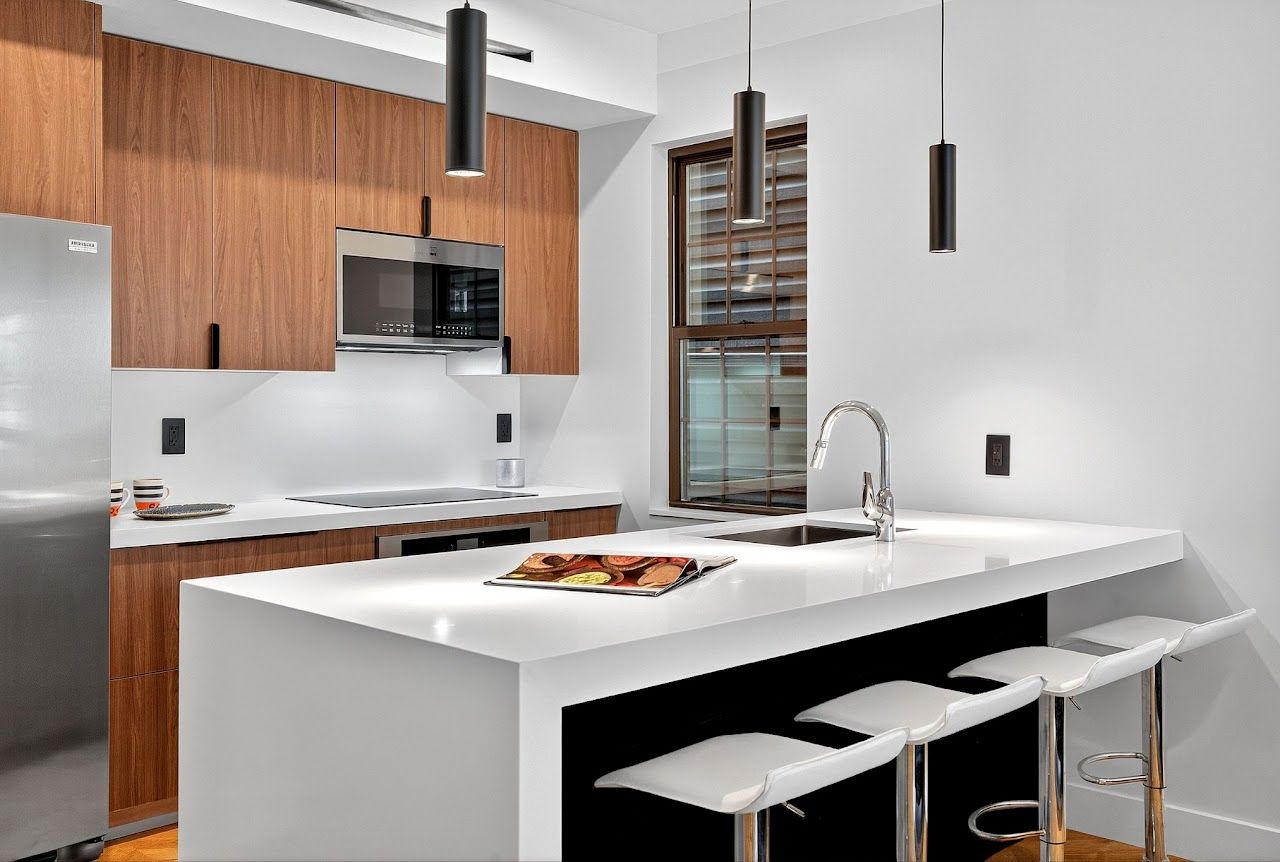
- Butcher block: warm and repairable; good for an island section or a baking area, not around a sink. One of our Jersey City kitchens at 33 Bayview pairs a quartz island with a butcher-block extension.
- Soapstone: soft, scratches, but does not stain or etch in the same way; develops a dark patina.
Fabrication and silica safety
Cutting and polishing stone, especially engineered quartz, releases respirable crystalline silica, which causes silicosis. In 2026 OSHA and NIOSH issued an updated hazard alert on worker exposure during countertop manufacturing, finishing and installation, and OSHA’s silica standard for construction requires dust controls such as wet cutting and vacuum dust collection. Practical consequences for homeowners:
- Choose a fabricator that cuts with water or effective dust collection in its shop.
- Most cutting should happen in the shop, not in your kitchen. On-site adjustments should be wet-cut or done with tools fitted with dust extraction.
- Ask your contractor how on-site stone work will be controlled, especially in an occupied apartment building.
Practical details for NJ and NYC kitchens
- Slab size and access. Long islands may exceed standard slab lengths (often about 120–130 inches for quartz; natural slabs vary). Plan seam locations with the fabricator. In walk-ups and brownstones, a large slab must be carried up stairs by hand, which can force a seam.
- Weight. A 3 cm stone counter weighs roughly 18–20 pounds per square foot. Cabinets must be level and well supported, and very large overhangs need hidden steel supports.
- Templating. The fabricator templates after base cabinets are installed; fabrication typically takes 1–2 weeks after templating.
- Sinks and cooktops. Undermount sinks and flush cooktops are cut from the exact model, so have them on site at templating.
- Edges. A simple eased edge is the most durable and least expensive. Mitered edges that make a slab look thicker add cost.
How to choose
- If you want zero maintenance and consistent color, choose quartz.
- If you want natural stone that tolerates heavy cooking, choose a verified quartzite or granite.
- If you love marble and accept patina, choose honed marble and seal it regularly.
- Visit the slab yard and pick your actual slabs, not a sample.
Countertops are part of every kitchen renovation we build; we coordinate templating, fabrication and installation with cabinet and plumbing schedules.
Frequently asked questions
Which is more durable, quartz or quartzite?
They fail in different ways. Quartzite is harder and more heat tolerant; quartz is more stain resistant and never needs sealing but can scorch. For a busy kitchen with hot pans, quartzite; for minimal maintenance, quartz.
How can I tell if a stone is real quartzite?
True quartzite scratches glass and does not etch when a drop of lemon juice or vinegar sits on it for a few minutes. Test an offcut of your actual slab; some stones sold as quartzite are marble or dolomite.
Is marble a bad choice for a kitchen?
Not if you accept etching and patina. Honed marble hides etch marks better than polished. If dull marks would bother you, use marble for a baking area or backsplash instead of the main work surface.
How much do quartz countertops cost installed in 2026?
Roughly $70–$150 per square foot installed as a planning range, so about $3,000–$10,000 for a typical kitchen of 40–70 square feet, before premium edges, waterfalls and extra cutouts.
Is engineered quartz dangerous?
Not once installed. The hazard is silica dust created when it is cut and polished. OSHA requires dust controls such as wet cutting for that work, so choose a fabricator that follows them and avoid dry cutting in your home.
Sources & further reading
- OSHA: Crystalline silica (including the countertop hazard alert)
- 29 CFR 1926.1153: Respirable crystalline silica standard for construction
Costs are 2026 planning ranges for the New Jersey and New York City market, not quotes. Rules summarized here change and vary by building and municipality; confirm requirements with your local building department, building management or attorney before you start.