How Much Does a Kitchen Renovation Cost in New Jersey? (2026 Guide)
What a kitchen remodel costs in New Jersey in 2026, by scope and region: refresh, full remodel and custom kitchens, where the money goes, permit and sales-tax rules, and how to budget.
Short answer
In 2026 most New Jersey kitchen renovations cost $20,000 – $40,000 for a refresh that keeps the layout, $40,000 – $90,000 for a full remodel with new cabinets, counters and appliances, and $90,000 – $175,000+ for a custom kitchen where walls, plumbing or gas move. Hudson and Bergen counties sit at the top of these ranges; South Jersey is typically lower. Add a 10–15% contingency, or 15–20% in houses built before 1940.
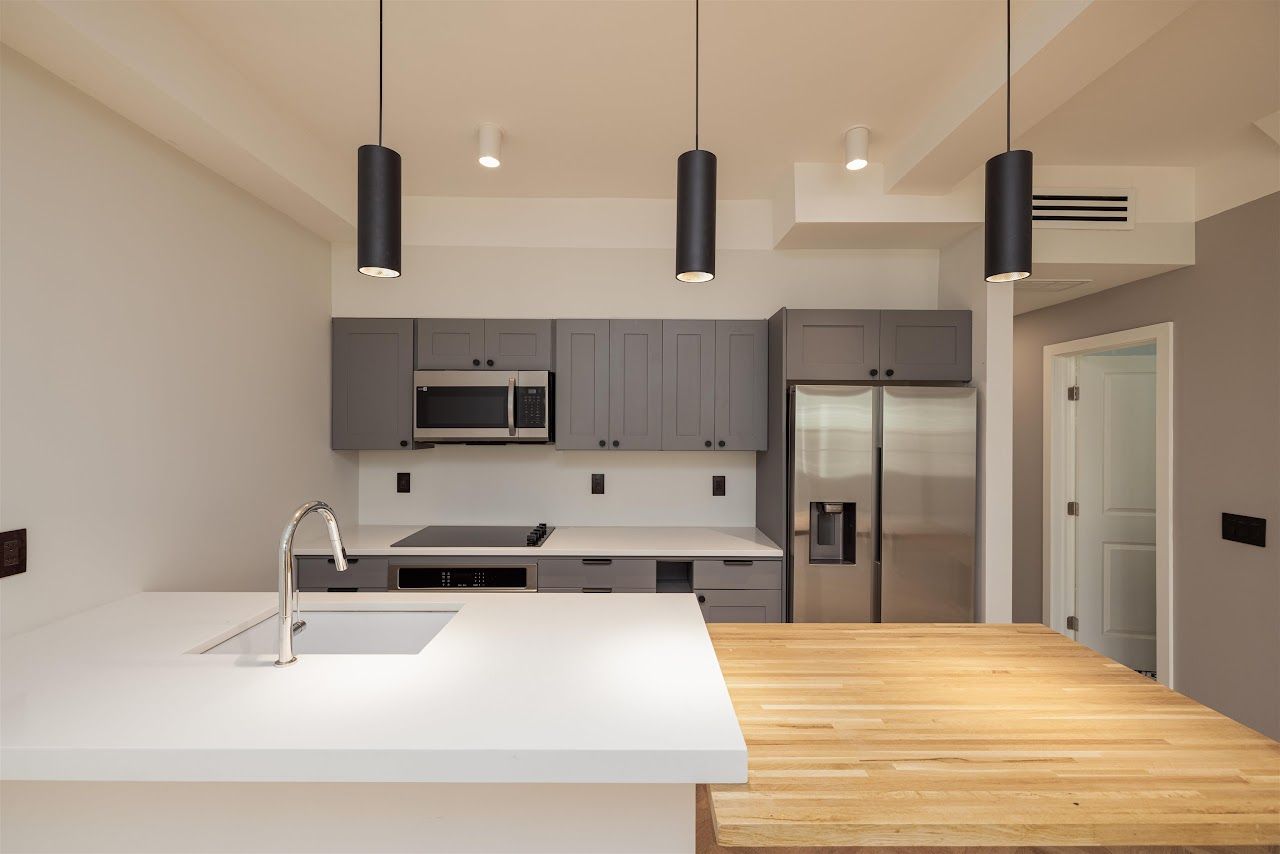
2026 New Jersey kitchen renovation costs by scope
“Kitchen renovation” covers everything from new countertops to a gutted room with a new layout. The single biggest cost driver is scope, so start by deciding which of these three projects you are actually doing.
| Scope | 2026 planning range |
|---|---|
| Refresh (same layout, new counters, fronts, lighting) | $20,000 – $40,000 |
| Full remodel (new cabinets, stone, appliances, same footprint) | $40,000 – $90,000 |
| Custom / layout change (walls, plumbing or gas moved) | $90,000 – $175,000+ |
Planning ranges for a typical 120–250 sq ft kitchen. Excludes premium appliance packages (Sub-Zero, Wolf, Miele and similar) and design fees.
Refresh: same layout, new surfaces
Cabinet boxes stay; you replace doors or reface, install new counters and backsplash, update lighting and swap the sink, faucet and appliances in place. Because no plumbing or gas moves and no walls open, a refresh often needs little or no permit work. It is the right call when the layout works and the cabinet boxes are sound.
Full remodel: new everything, same footprint
The most common project we price. All cabinetry, counters, flooring, lighting and appliances are new; the sink and range stay roughly where they are. Expect new electrical circuits (dedicated appliance circuits and countertop outlets to current code), which means an electrical permit, and usually a plumbing permit for the new sink and dishwasher connections.
Custom or layout change
Opening a wall to the living room, moving the sink to an island, converting to a gas range or running a ducted hood to the exterior all add trades, engineering and inspections. Removing a bearing wall requires an engineered beam and a building permit. Custom cabinetry and natural stone often push these kitchens past $150,000.
How location within New Jersey changes the price
New Jersey construction costs run above the national average, and they vary within the state:
- Hudson County (Jersey City, Hoboken, Weehawken, Bayonne): highest labor and logistics costs, frequent condo-building rules, older rowhouses with surprises behind the walls.
- Bergen, Essex, Morris and Union counties: high-end finishes are common in towns such as Montclair, Ridgewood, Westfield and Summit, which pulls averages up.
- Central and South Jersey: generally lower labor rates, with more single-family homes on slabs or crawlspaces that are simpler to work in.
National cost websites often quote a New Jersey “average” around $25,000–$30,000. That figure mixes small refreshes with full remodels; it is rarely enough for a full kitchen remodel in North Jersey.
Where the money goes
On a typical full remodel, the budget breaks down roughly like this. Use it to sanity-check bids, not as a rule.
| Category | Typical share of budget |
|---|---|
| Cabinetry and hardware | 25–35% |
| Labor: demolition, carpentry, installation | 20–30% |
| Appliances | 10–20% |
| Countertops and backsplash | 10–15% |
| Plumbing and electrical (incl. lighting) | 10–15% |
| Flooring, drywall, paint | 5–10% |
| Design, permits, dumpster, protection | 3–7% |
What pushes a New Jersey kitchen over budget
- Moving plumbing or gas. Relocating a sink or range means new drain, vent and supply lines, sometimes through finished ceilings below.
- Structural changes. Taking down a bearing wall requires an engineer, a beam (steel or LVL), temporary shoring and a building inspection.
- Electrical service. Many older Jersey City and Essex County homes have 60–100 amp service. An induction range, double ovens and modern lighting may require a service upgrade coordinated with PSE&G.
- Old-house conditions. Knob-and-tube wiring, galvanized pipes, out-of-level floors and lead paint (pre-1978 homes require EPA lead-safe work practices) are common in prewar housing.
- Cabinet grade. Stock, semi-custom and custom cabinetry can differ by a factor of three for the same kitchen.
- Ventilation. A properly ducted hood is worth it, but long duct runs through joists or exterior walls take labor. Very large hoods can also trigger make-up air requirements.
- Decisions made late. Changing a layout after cabinets are ordered is the most expensive thing you can do. Finalize appliance models before cabinets are drawn.
Permits, fees and New Jersey sales tax
Under New Jersey’s Uniform Construction Code, replacing cabinets and counters in place is generally treated as ordinary maintenance, but new circuits or outlets, relocated plumbing fixtures and structural work need permits from your municipal construction office. Permit fees are set locally and are usually a small fraction of the project budget. See our New Jersey permit guide for the details.
Sales tax is a New Jersey-specific detail many homeowners miss. A kitchen renovation usually qualifies as a capital improvement: the contractor pays sales tax on the materials it buys, and labor is not taxed if the homeowner gives the contractor a completed Certificate of Exempt Capital Improvement (Form ST-8). Some line items, such as certain floor-covering installation, remain taxable. Ask your contractor how tax is handled in the proposal.
How to budget (and where to save)
- Set the scope first. Decide refresh, full remodel or layout change before you collect bids, or the bids will not be comparable.
- Keep the plumbing wall where it is if the layout allows. It is the most reliable saving in any kitchen.
- Spend on what you touch daily: drawers with full-extension soft-close slides, a good faucet, task lighting. Save on decorative extras.
- Consider quartz over natural stone if you want low maintenance at a predictable price; quartzite and marble vary more slab to slab.
- Carry a contingency of 10–15% (15–20% in prewar homes) and don’t spend it on upgrades until the walls are open.
- Get itemized bids with allowances spelled out (cabinets, stone, tile, fixtures) so you can see what is and isn’t included.
Does a kitchen renovation pay off?
Kitchens are among the renovations buyers notice most, and in competitive markets like Hudson County a dated kitchen can weigh on sale price. Mid-range remodels generally recover a larger share of their cost at resale than luxury remodels do. If you plan to sell within a few years, a well-executed full remodel with durable mid-to-upper finishes is usually a better bet than a fully custom kitchen.
Frequently asked questions
Is $50,000 enough for a kitchen remodel in New Jersey?
Often yes for a full remodel of a modest kitchen that keeps its layout, using semi-custom cabinets and quartz counters. It is usually not enough in Hudson County if you move plumbing, remove walls or choose custom cabinetry.
How much does a small kitchen remodel cost in NJ?
A small kitchen (under about 100 sq ft) with a full remodel commonly lands in the $35,000–$60,000 range in North Jersey. Labor and permits don’t shrink proportionally with size, so small kitchens cost more per square foot.
Do I need a permit to remodel my kitchen in New Jersey?
Yes if you add circuits or outlets, move plumbing or gas, or alter walls or structure. Swapping cabinets, counters and fixtures in the same location is generally ordinary maintenance. Your contractor should pull the permits. NJ permit guide.
Do I pay sales tax on a kitchen renovation in NJ?
Usually not on labor, if the work is a capital improvement and you give the contractor a completed Form ST-8. The contractor pays tax on materials, which is built into the price.
How long does a kitchen renovation take in New Jersey?
Typically 6–10 weeks of construction after design, permits and cabinet lead times, so 3–5 months from first meeting to finished kitchen is common. Week-by-week timeline.
Sources & further reading
- NJ Division of Taxation: Form ST-8, Certificate of Exempt Capital Improvement
- N.J.A.C. 5:23-2.7: Ordinary maintenance under the Uniform Construction Code
- NJ Department of Community Affairs: Division of Codes and Standards
- US EPA: Renovation, Repair and Painting (lead-safe) Program
- Fixr: Kitchen remodel cost in New Jersey (national cost-site comparison)
Costs are 2026 planning ranges for the New Jersey and New York City market, not quotes. Rules summarized here change and vary by building and municipality; confirm requirements with your local building department, building management or attorney before you start.