Kitchen Renovation Cost in NYC: 2026 Guide for Co-ops, Condos & Townhouses
What a kitchen renovation costs in New York City in 2026: refresh vs full remodel vs gut, the soft costs of co-op and condo approvals and DOB filings, and why NYC costs more than New Jersey.
Short answer
In 2026 a New York City kitchen renovation typically costs $30,000 – $60,000 for a refresh that keeps the layout, $60,000 – $125,000 for a full remodel, and $125,000 – $250,000+ for a custom or gut kitchen in a co-op, condo or townhouse. On top of construction, co-op and condo owners should budget roughly 10–20% for soft costs: architect or engineer fees for DOB filing, building review fees and deposits, and insurance requirements.
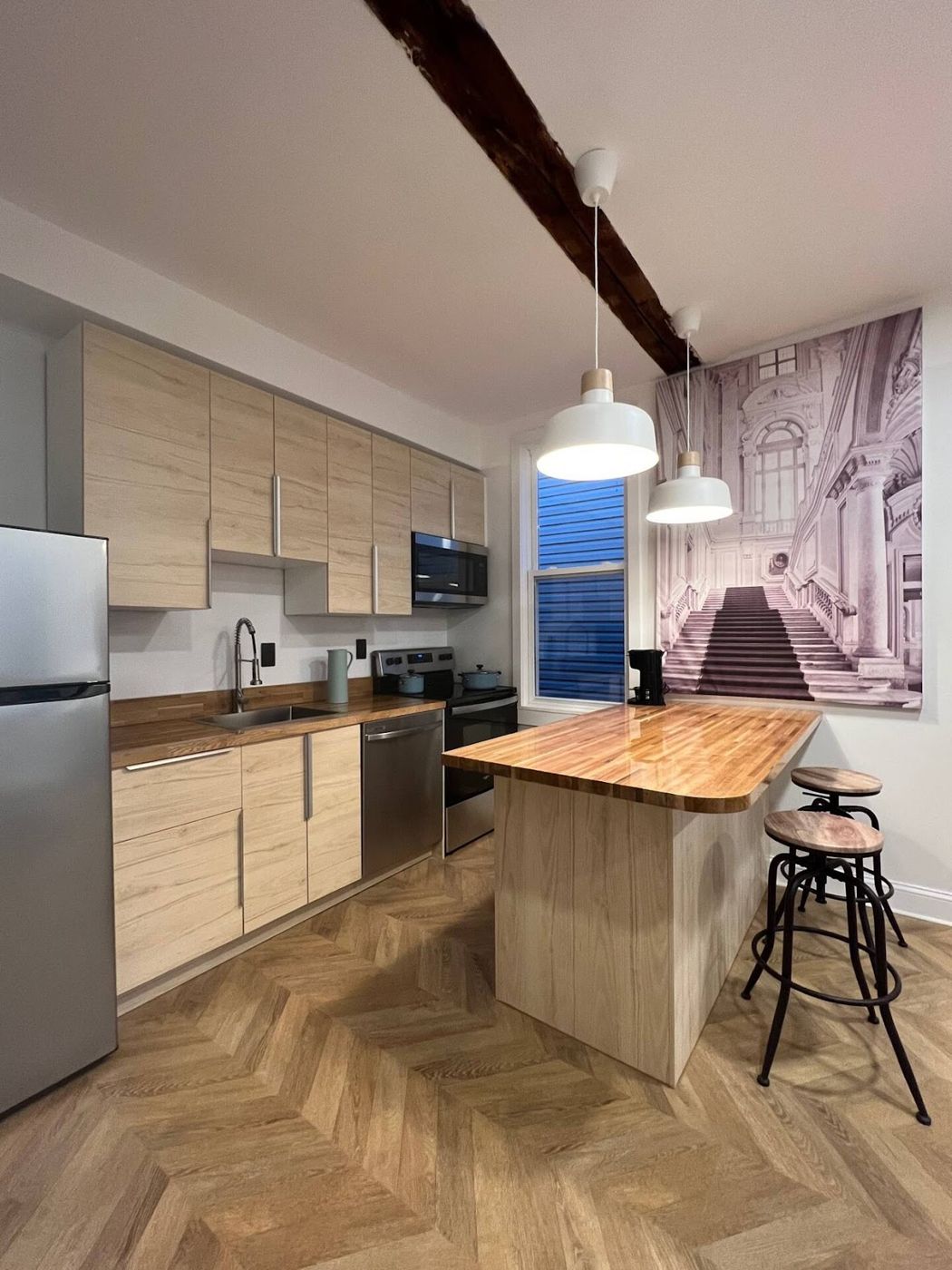
2026 NYC kitchen renovation costs by scope
| Scope | 2026 planning range |
|---|---|
| Refresh (same layout, new counters, fronts, lighting) | $30,000 – $60,000 |
| Full remodel (new cabinets, stone, appliances) | $60,000 – $125,000 |
| Custom / gut in a co-op, condo or townhouse | $125,000 – $250,000+ |
Typical Manhattan, Brooklyn and Queens apartments and townhouses. Excludes board/alteration fees, architect fees, premium appliances and temporary housing.
Refresh
New counters, cabinet fronts or refacing, backsplash, lighting and appliances in the same positions. In NYC this can often be done without a DOB permit, but your co-op or condo will still usually require an alteration agreement or at least a written work request, proof of insurance and a schedule.
Full remodel
New cabinetry, stone, appliances, flooring and lighting with plumbing and gas in roughly the same place. New electrical circuits and plumbing connections usually mean licensed trades file with the Department of Buildings, and if the work involves multiple trades, a licensed architect or engineer files an Alteration Type 2 (ALT2) application.
Custom or gut kitchen
Opening the kitchen to the living room, adding an island with a sink, extending into a former dining room or changing gas lines. These need drawings, DOB filing, board approval and often structural or mechanical engineering. In prewar co-ops, you may also be limited by the building’s “wet over dry” rule (below).
Why kitchens cost more in New York City
- Building rules. Most buildings restrict work to weekday business hours, require elevator reservations and hallway protection, and set minimum insurance limits that contractors must carry, with the building and managing agent named as additional insureds.
- Licensed trades and filings. Plumbing and gas work must be performed by a DOB-licensed master plumber, and electrical work by a licensed master electrician, with their own permits and inspections.
- Logistics. No driveway, limited parking, freight elevators shared with the whole building, and debris that has to be carted out by hand.
- Prewar conditions. Plaster walls, out-of-level floors, old cast-iron and galvanized lines, and asbestos-containing materials in older buildings add demolition and testing time.
- Labor market. Skilled trades in the five boroughs command higher rates than almost anywhere in the country.
Soft costs NYC owners forget to budget
| Item | When it applies |
|---|---|
| Architect or engineer (RA/PE) for drawings and DOB filing | Any kitchen needing an ALT2 or structural work |
| Building’s architect/engineer review fee | Most co-ops and many condos |
| Alteration agreement processing fee and refundable security deposit | Most co-ops and condos |
| Asbestos investigation (ACP-5) by a DEP-certified investigator | DOB permits in buildings built before April 1, 1987 |
| DOB permit and filing fees, expediter if used | Permitted work |
| Temporary kitchen, takeout or temporary housing | Full and gut remodels |
Together these typically add 10–20% to a co-op or condo kitchen. Ask for them to be listed separately from the construction price so you can compare bids accurately.
Co-op vs condo vs townhouse
- Co-ops are the most regulated: detailed alteration agreements, board architect review, strict work hours, sometimes seasonal limits on major work, and rules on where kitchens and bathrooms may go.
- Condos usually have a lighter approval process, but most still require an alteration agreement, insurance certificates and plan review for anything beyond cosmetic work.
- Townhouses and brownstones have no board, so you control the layout, but older structure and systems often expand the scope. Landmarked buildings may need Landmarks Preservation Commission approval.
The “wet over dry” rule
Many NYC co-ops and some condos prohibit placing “wet” rooms (kitchens and bathrooms) over “dry” living spaces such as a neighbor’s bedroom or living room, because a leak would damage the unit below. In practice this means you can usually rearrange within the existing kitchen footprint, but moving the kitchen into the former living room is often not allowed. Check your proprietary lease, house rules and alteration agreement before paying for design.
Gas or induction?
New York City’s all-electric building law (Local Law 154 of 2021) is aimed at new construction. For a kitchen renovation in an existing building, the practical question is that any change to gas piping needs a licensed master plumber, a DOB filing and pressure tests before gas is restored, which can add weeks. Many owners switch to induction partly for this reason; confirm that your apartment’s electrical capacity can support it.
How to keep a NYC kitchen on budget
- Get your building’s alteration agreement and house rules before design starts.
- Keep the sink and range on their existing walls where possible.
- Choose appliances first; cabinets and electrical are designed around them.
- Order cabinets and stone as soon as drawings are approved so lead times overlap with board review.
- Carry a 10–15% contingency, more in prewar buildings.
Frequently asked questions
How much does a full kitchen renovation cost in Manhattan?
For 2026 planning, most full kitchen remodels in Manhattan apartments land between $60,000 and $125,000, before co-op or condo soft costs. Custom kitchens and gut renovations commonly exceed $125,000.
Do I need a DOB permit to renovate my NYC kitchen?
Most kitchen renovations with plumbing, gas or electrical changes need DOB permits, typically an ALT2 filed by a licensed architect or engineer. Painting, plastering, new cabinets and resurfacing floors generally do not, though cabinet and flooring contractors must be DCWP-licensed. Your building may require approval either way.
How long does a co-op kitchen renovation take?
Commonly 4–6 months end to end: several weeks of design, several weeks to a few months for board review and DOB filing, then 8–12 weeks of construction. Detailed timeline.
Is a kitchen renovation cheaper in Brooklyn or Queens than Manhattan?
Often somewhat, mainly because of building logistics and the share of townhouses vs. full-service co-ops. The bigger driver is building type and finish level, not borough.
Sources & further reading
- NYC Department of Buildings: Renovating kitchens & bathrooms
- NYC Department of Buildings: Project requirements, asbestos
- NYC DCWP: Home Improvement Contractor license
- NYC Landmarks Preservation Commission
- Brick Underground: How to renovate in New York City
Costs are 2026 planning ranges for the New Jersey and New York City market, not quotes. Rules summarized here change and vary by building and municipality; confirm requirements with your local building department, building management or attorney before you start.