Bathroom Renovation Cost in New Jersey and NYC (2026)
What a bathroom renovation costs in New Jersey and New York City in 2026: powder rooms, full remodels and primary baths, what drives the price, and how to avoid paying twice for leaks.
Short answer
In 2026 a full bathroom remodel typically costs $20,000 – $40,000 in New Jersey and $30,000 – $55,000 in New York City. Powder rooms and cosmetic refreshes start around $10,000 in NJ and $15,000 in NYC; primary baths with a new layout or luxury finishes run $45,000 – $85,000+ in NJ and $60,000 – $120,000+ in NYC. Moving the toilet or shower drain is the biggest single cost driver.
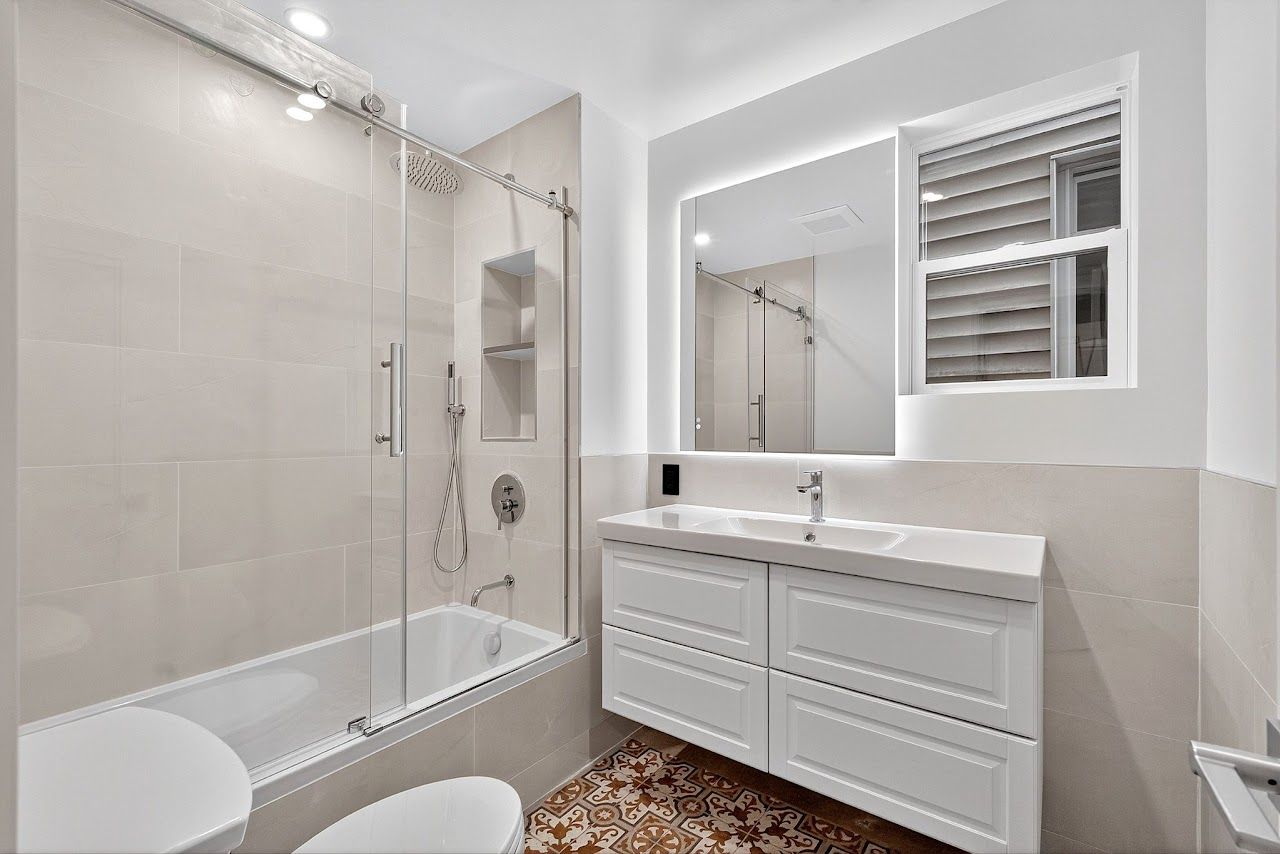
2026 bathroom renovation costs
| Scope | 2026 planning range |
|---|---|
| Powder room or cosmetic refresh | $10,000 – $20,000 |
| Full remodel (new tile, shower/tub, vanity, fixtures) | $20,000 – $40,000 |
| Primary bath with layout change or luxury finishes | $45,000 – $85,000+ |
| Scope | 2026 planning range |
|---|---|
| Powder room or cosmetic refresh | $15,000 – $30,000 |
| Full remodel (new tile, shower/tub, vanity, fixtures) | $30,000 – $55,000 |
| Primary bath in a co-op/condo or with layout change | $60,000 – $120,000+ |
Installed cost including labor, materials and permits. Excludes design fees and co-op/condo fees. Typical bathroom of 35–80 sq ft; primary baths are often larger.
What each level gets you
Powder room or cosmetic refresh
New vanity, toilet, faucet, mirror, lighting and paint, perhaps new floor tile, with fixtures staying where they are. Little or no permit work. In NYC co-ops, even this level usually needs a work request and insurance certificates.
Full remodel
Demolition to the studs in the wet areas, new supply and drain lines to the existing fixture locations, a new shower or tub with a continuous waterproofing membrane, new tile, vanity, toilet, glass, ventilation and lighting. This is the most common bathroom project and usually involves plumbing and electrical permits.
Primary bath or layout change
Converting a tub to a walk-in or curbless shower, adding a second sink, relocating the toilet, adding heated floors, steam showers or natural stone. Layout changes require new drain routing, which in apartments may be limited by what is below you and where the building’s risers are.
What drives bathroom cost
- Drain locations. Moving a toilet means re-routing a 3-inch drain with proper slope. In a house, that may mean opening the ceiling below; in an apartment it may not be allowed at all.
- Shower type. A curbless shower requires a recessed or sloped subfloor and a linear or carefully placed drain, which adds structural and waterproofing work.
- Tile. Large-format porcelain needs a very flat substrate; patterned, encaustic and mosaic tile take more labor per square foot; natural stone needs sealing.
- Glass. Custom frameless glass is a meaningful line item, often more than homeowners expect.
- Valves and fixtures. Thermostatic valves with multiple outlets, wall-hung toilets (which need an in-wall carrier) and designer fixtures add cost quickly.
- Building type. Prewar apartments often have mud-set floors and old cast-iron branch lines that add demolition and plumbing time.
Popular upgrades and what they involve
| Upgrade | What it involves | Cost impact |
|---|---|---|
| Electric radiant floor heat | Heating mat in thin-set under tile, thermostat, dedicated circuit | Low |
| Tub-to-shower conversion | New pan or mortar bed, membrane, valve relocation, glass | Medium |
| Curbless shower | Recessed or sloped subfloor, linear drain, continuous membrane | Medium to high |
| Wall-hung toilet | In-wall carrier, deeper wall, access panel | Medium |
| Double vanity | Second supply and drain, wider wall, lighting | Medium |
| Steam shower | Generator, vapor-tight enclosure, sloped ceiling, dedicated circuit | High |
The cheapest bathroom is the one you only build once
Most bathroom failures are invisible on handover day and show up a year later as stained ceilings below. Pay for these, every time:
- A continuous waterproofing membrane on shower walls and floor, with seams, corners and valve penetrations sealed.
- A flood test of the shower pan before tile.
- Proper slope to the drain.
- A ducted exhaust fan vented to the outside, not into the ceiling cavity.
- Cement board or foam board (not standard drywall) in wet areas.
Our bathroom planning guide covers these in more detail.
New Jersey vs New York City
The same bathroom costs more in NYC for the reasons covered in our NYC kitchen cost guide: building work rules, licensed-trade filings, logistics and prewar conditions. In New Jersey, a full bath in a single-family home is usually simpler to access from the basement or the room below, which keeps plumbing costs down. In both places, permit requirements kick in when you move plumbing or add circuits; see our NJ permit guide and NYC co-op and condo guide.
Frequently asked questions
How much does it cost to redo a small bathroom in NYC?
A full remodel of a small (35–45 sq ft) NYC bathroom commonly costs $30,000–$40,000 in 2026 if fixtures stay in place, more in a prewar co-op or with premium tile and glass.
How much does a bathroom remodel cost in New Jersey?
Most full bathroom remodels in New Jersey run $20,000 – $40,000. Hudson and Bergen counties trend toward the top of the range.
How long does a bathroom renovation take?
Typically 3–5 weeks of construction in a New Jersey house and 4–7 weeks in a NYC apartment, plus design and approval time. Waterproofing and grout need cure time.
Is a tub-to-shower conversion worth it?
For primary bathrooms, usually yes; many buyers prefer a large walk-in shower. Keep at least one tub in the home if you expect to sell to families.
Sources & further reading
- NYC Department of Buildings: Renovating kitchens & bathrooms
- N.J.A.C. 5:23-2.7: Ordinary maintenance (like-for-like fixture replacement)
- Fixr: Bathroom remodel cost in New Jersey (national cost-site comparison)
- Brick Underground: How to renovate in New York City
Costs are 2026 planning ranges for the New Jersey and New York City market, not quotes. Rules summarized here change and vary by building and municipality; confirm requirements with your local building department, building management or attorney before you start.