Bathroom Tile Guide: Porcelain vs Ceramic vs Natural Stone, Sizes, Grout and Slip Resistance
How to choose bathroom tile: porcelain vs ceramic vs marble and other stone, large-format vs mosaic, slip resistance on shower floors, grout types, layout, installed cost in 2026 and what is under old tile in NJ and NYC.
Short answer
Porcelain is the best all-round bathroom tile: dense, water-resistant, durable and available in convincing stone and wood looks. Ceramic works well on walls and costs less. Natural stone such as marble is beautiful but needs sealing and etches. Use larger tiles on walls and floors for fewer grout lines, and small mosaics or textured tile on shower floors for grip. As 2026 planning figures, tile installation in NJ and NYC typically runs $25–$60 per square foot for labor and setting materials, plus the tile, and the waterproofing beneath matters more than the tile itself.
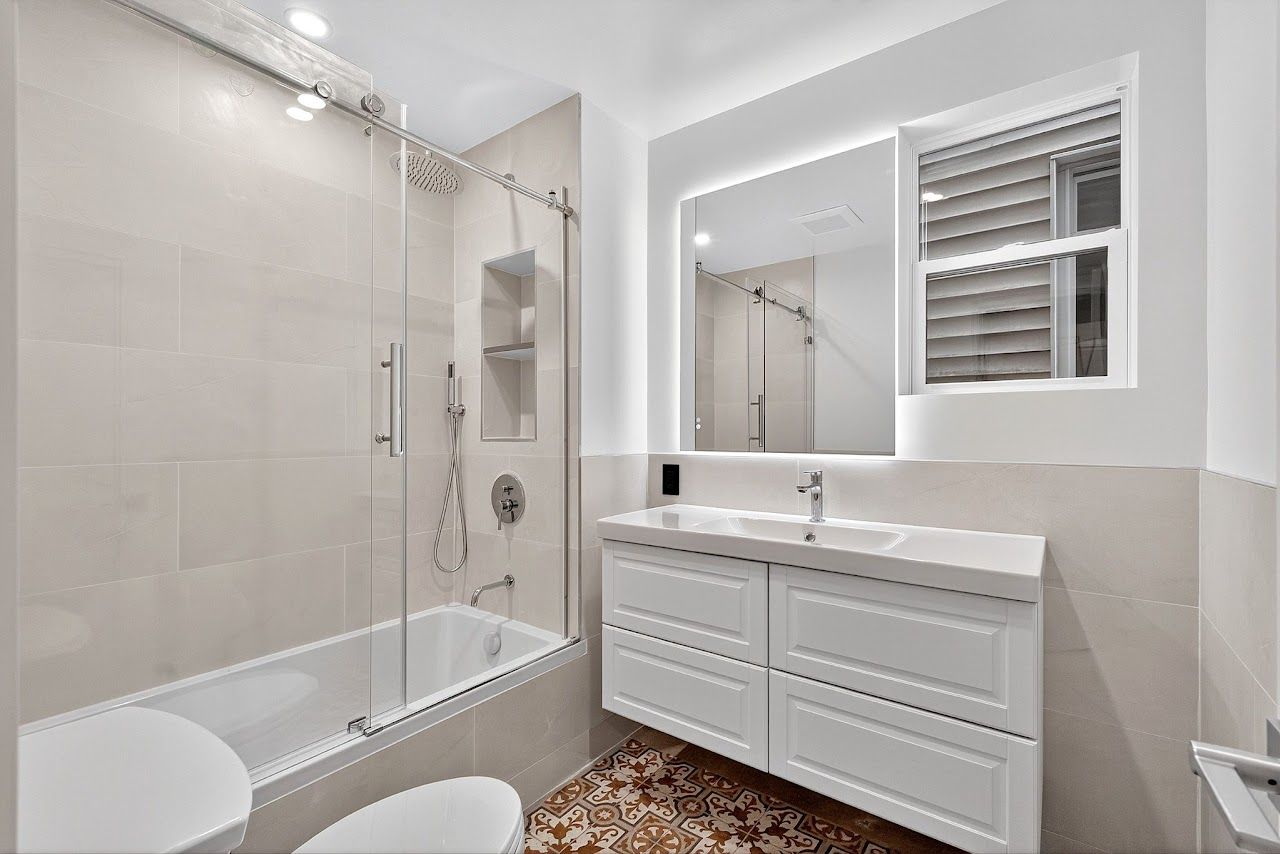
The main tile materials
| Material | Best for | Strengths | Watch-outs |
|---|---|---|---|
| Porcelain | Floors, walls, showers | Very low water absorption, hard, stain resistant, huge range of looks and sizes | Harder to cut; large formats need a very flat substrate |
| Ceramic (glazed) | Walls, low-traffic floors | Less expensive, easy to cut, classic subway and handmade looks | Softer body; chips show the color beneath the glaze |
| Marble | Floors, walls, vanity tops | Classic look, each piece unique | Etches and stains; needs sealing; polished marble is slippery when wet |
| Limestone, travertine | Floors, walls | Soft, natural texture | Porous; needs sealing; can stain |
| Cement (encaustic) tile | Floors, feature walls | Bold patterns, color through the body | Must be sealed; can stain and etch; heavy |
| Glass mosaic | Accent walls, niches | Bright, waterproof | Shows substrate flaws; slippery on floors |
| Zellige and handmade tile | Walls | Variation and depth | Irregular edges mean wider grout lines and more labor |
Size and layout
Large-format tile
Tiles of 24 by 24 inches, 24 by 48 inches and larger slabs reduce grout lines and make small bathrooms look bigger. They require a very flat substrate, proper trowels and back-buttering, and often leveling clips; uneven floors in older NJ houses and NYC prewar buildings may need self-leveling compound first. Large tiles on a shower floor require a linear drain or careful cuts to follow the slope.
Mosaics on shower floors
Small tiles (1 to 3 inches) on a shower floor follow the slope to a center drain easily, and the extra grout lines give grip. Pair them with large tile on the walls.
Layout decisions to make before ordering
- Where the tile starts and stops, so cuts at the doorway and in the most visible corner are full or half tiles, not slivers.
- Pattern: straight stack, running bond (offset by a third for long tiles to limit lippage), herringbone or chevron. Patterns add labor and waste.
- How niches, benches and the shower curb align with grout lines.
- Trim: metal edge profiles, bullnose tile or mitered corners.
Slip resistance
For floors, especially wet floors, ask for the tile’s dynamic coefficient of friction (DCOF) and its rating for interior wet use under the ANSI A326.3 standard, which tile manufacturers publish. Matte and textured finishes are safer than polished. On shower floors, small mosaics or a textured porcelain give the most grip. This matters even more in bathrooms designed for aging in place; see our aging-in-place guide.
Grout and setting materials
| Grout | Use | Notes |
|---|---|---|
| Cement grout (sanded or unsanded) | General use | Least expensive; porous; usually sealed |
| High-performance cementitious grout | Floors, showers | More stain and color resistant; no sealing with many products |
| Epoxy or urethane grout | Showers, light-colored grout, heavy use | Very stain resistant; costs more and takes skill to install |
Use the setting mortar the tile and membrane manufacturers specify, especially for large-format porcelain and natural stone. White mortar is often required under light marble to prevent shadowing.
What is under the tile matters most
Tile and grout are not waterproof. A shower lasts because of what is beneath it:
- Cement board or foam board in wet areas, never ordinary drywall.
- A continuous sheet or liquid waterproofing membrane covering the shower walls and floor, with corners, niches and valve openings sealed.
- A shower floor sloped to the drain.
- A flood test before tiling; many NYC co-ops and condos require one.
Moisture trapped behind tile leads to mold; the EPA’s guidance on mold stresses controlling moisture as the key to preventing it. Our bathroom planning guide covers waterproofing in more detail.
Sealing and maintenance
- Porcelain and glazed ceramic need no sealing; the grout may, depending on the product.
- Marble, limestone, travertine and cement tile should be sealed after installation and resealed periodically, often once or twice a year in a shower. A simple test: if a few drops of water darken the stone within minutes, it is time to reseal.
- Cleaners: use pH-neutral cleaners on natural stone. Acidic and bleach-based bathroom cleaners etch marble and degrade some grouts.
- Squeegee the shower after use; it keeps grout and glass clean far longer than any coating.
- Keep spare tile from the same production lot, labeled, for future repairs. Colors vary between lots and discontinued lines are hard to match.
Removing old tile in older buildings
- Asbestos: older vinyl floor tile and some tile mastics can contain asbestos. In New York City, the Department of Buildings has asbestos requirements for projects that disturb building materials, and buildings commonly require a survey before demolition.
- Lead: painted walls and trim in homes built before 1978 may contain lead paint, and contractors disturbing it must follow the EPA’s lead-safe Renovation, Repair and Painting rule.
- Mud beds: prewar bathrooms often have tile set in a thick mortar bed. Removing it is heavy, dusty work but usually gains floor depth for a curbless shower.
Cost
| Item | 2026 planning range |
|---|---|
| Tile material: ceramic and basic porcelain | $4 – $12 / sq ft |
| Tile material: premium porcelain, large format | $10 – $30 / sq ft |
| Tile material: marble, handmade, cement tile | $15 – $50+ / sq ft |
| Installation labor and setting materials (NJ and NYC) | $25 – $60 / sq ft |
| Patterns (herringbone, chevron), mosaics, large slabs | Add 20–50% to labor |
Planning ranges, not quotes. Waterproofing, substrate preparation and demolition are priced separately. Order 10–15% extra tile for cuts, breakage and future repairs.
A typical full bathroom uses 150–300 square feet of tile. See our bathroom cost guide for total project ranges, or our bathroom renovation service.
Frequently asked questions
Is porcelain or ceramic tile better for a bathroom?
Porcelain is denser, absorbs less water and is more durable, so it is the better choice for floors and showers. Glazed ceramic is fine and less expensive for walls.
What is the best tile for a shower floor?
Small porcelain mosaics or a textured porcelain rated for wet areas. The many grout lines in a mosaic add grip and follow the slope to the drain. Avoid polished stone on shower floors.
Is marble a good choice for a bathroom?
It can be, with care. Marble needs sealing, etches from acidic cleaners and is slippery when polished and wet. Honed marble on floors and walls is more practical.
How much does it cost to tile a bathroom in NJ or NYC?
As a 2026 planning range, installation labor and setting materials run about $25–$60 per square foot, plus the tile. A full bathroom with 150–300 square feet of tile typically spends several thousand to over $15,000 on tile and installation.
Could my old bathroom tile contain asbestos?
Older vinyl floor tile and some tile adhesives can. In NYC, the Department of Buildings has asbestos requirements for projects that disturb building materials, and buildings often require a survey before demolition.
Sources & further reading
- US EPA: A brief guide to mold, moisture and your home
- US EPA: Renovation, Repair and Painting Program
- NYC Department of Buildings: Asbestos project requirements
Costs are 2026 planning ranges for the New Jersey and New York City market, not quotes. Rules summarized here change and vary by building and municipality; confirm requirements with your local building department, building management or attorney before you start.