Bathroom Lighting and Mirrors: Vanity Lights, Wet-Location Fixtures, Backlit and Medicine-Cabinet Mirrors
How to light a bathroom and choose the mirror in a NJ house or NYC apartment: vanity light placement, wet-rated fixtures near the tub and shower, GFCI rules, backlit and medicine-cabinet mirrors, 2026 cost.
Short answer
Good bathroom lighting puts light on the face from the sides or front at the mirror, not only from a ceiling fixture above. Plan three layers: vanity lighting, general ceiling light, and a wet-rated light in the shower. The electrical codes in New Jersey and New York City are both based on the 2020 National Electrical Code, which limits fixtures over the tub and shower and requires GFCI-protected bathroom receptacles. In 2026, lighting and mirrors for a full bathroom renovation commonly run $1,500–$8,000 installed, depending on fixtures and whether you choose a backlit or recessed mirror cabinet.
Light the face, not the top of the head
A single recessed light above the vanity casts shadows under the eyes and chin, which is why so many bathrooms feel harsh. The fix is light at face height:
- Side sconces on each side of the mirror, centered roughly at eye level (commonly 60–66 inches above the floor) and about 30–40 inches apart, give the most even light.
- A fixture above the mirror works where the wall is too narrow for sconces, as in many NYC apartment bathrooms. Mount it a few inches above the mirror and choose one wide enough to cover most of the mirror width.
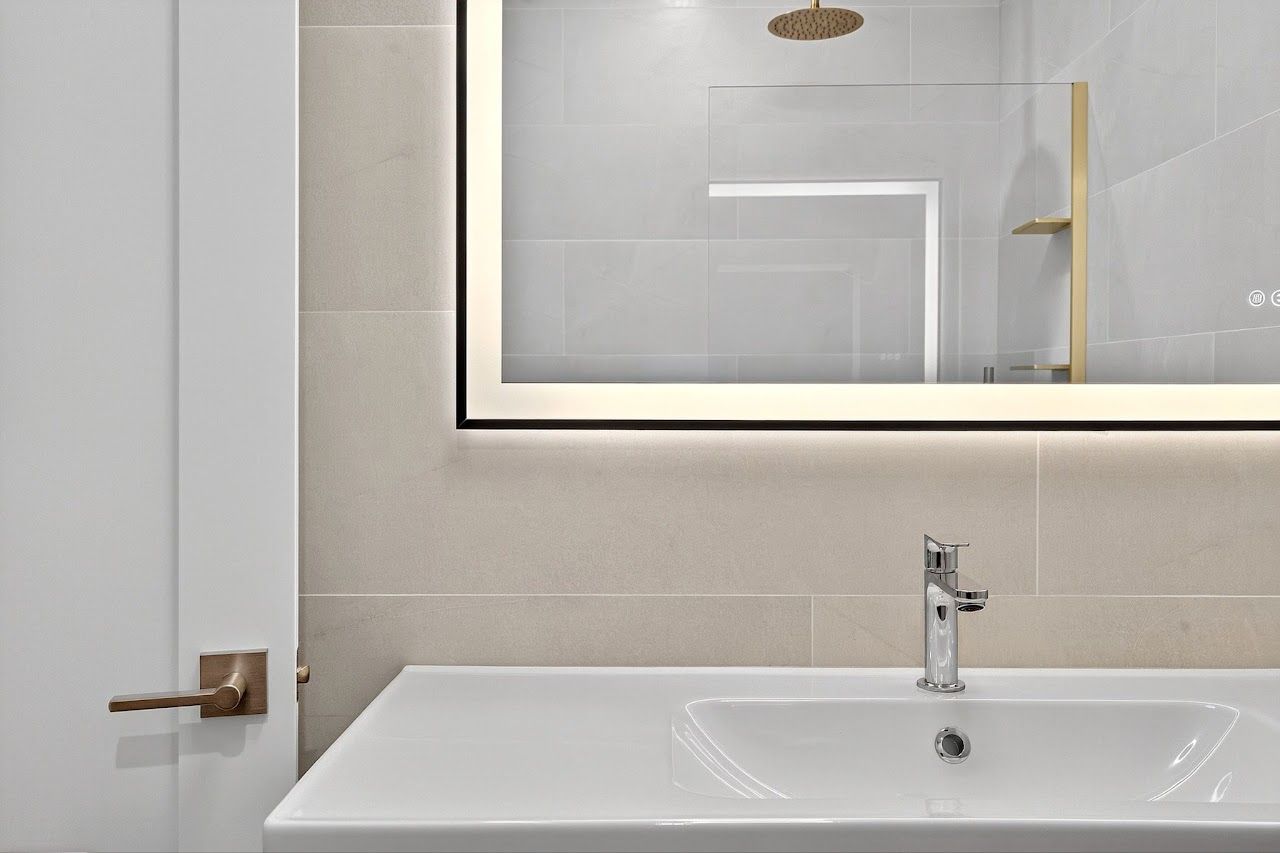
- A backlit or front-lit mirror adds even light at the face and is a strong option in small rooms; pair it with a ceiling light for general lighting.
Plan three layers
| Layer | Typical fixtures | Planning notes |
|---|---|---|
| Task (vanity) | Sconces, bar light, lighted mirror | On its own switch or dimmer; high color rendering (CRI 90+) for grooming |
| General | Flush ceiling fixture or 1–4 recessed lights | Recessed lights must be rated for the ceiling type and insulation contact where relevant |
| Shower and tub | Wet-rated recessed light, lit niche | Must be listed for wet locations where exposed to spray |
| Night and accent | Toe-kick lights under a floating vanity, low-level LED strip | Low output on a separate switch or motion sensor |
Color temperature is a matter of taste, but most people prefer about 2700–3000K in a bathroom, the same as adjoining rooms, so the light does not look clinical at night. Use one temperature throughout the room. The same layering logic appears in our kitchen lighting guide.
What the electrical code says about bathrooms
New Jersey’s electrical subcode adopts the 2020 National Electrical Code, and the 2025 New York City Electrical Code is based on the same edition with city amendments. Your electrician and inspector apply the exact rules; the ones that affect design decisions are:
- The tub and shower zone: hanging fixtures, pendants, chandeliers, track lighting and ceiling fans are not allowed within a zone measured 3 feet horizontally and 8 feet vertically from the top of the tub rim or shower threshold. Fixtures in that zone, or exposed to shower spray, must be listed for damp or wet locations as applicable. A pendant over a freestanding tub therefore usually needs a high ceiling or a different location.
- GFCI protection: bathroom receptacles must be GFCI-protected.
- Receptacle near the sink: at least one receptacle within about 3 feet of the outside edge of each basin, typically on a 20-amp circuit serving bathroom receptacles.
- Permits: new circuits, relocated boxes and new fixtures are electrical work. In New Jersey that generally means an electrical permit and inspection; in New York City the work must be done and filed by a Licensed Electrician.
Choosing the mirror
| Type | Pros | Cons | 2026 installed planning range* |
|---|---|---|---|
| Framed or frameless mirror | Simplest, inexpensive, any size | No storage | $200 – $1,200 |
| Backlit or front-lit LED mirror | Even face lighting; dimmable; defogger options | Needs a hardwired box behind it; replace the unit if the LEDs fail | $600 – $2,500 |
| Surface-mounted medicine cabinet | Storage without opening the wall | Projects 4–6 inches; can hit a door or sconce | $400 – $1,500 |
| Recessed medicine cabinet, optionally lit | Storage flush with the wall; outlets and USB inside on some models | Needs a stud bay free of pipes, ducts and wiring | $900 – $4,000 |
*Including typical electrical connection and patching. These are planning ranges, not quotes.
Recessed cabinets in apartments and old houses
Recessing a cabinet is easy in a new stud wall and harder in reality. In NYC apartments, the wall behind the sink often holds the plumbing riser, a vent, or the exhaust duct; in prewar buildings it may be solid masonry or plaster on block. Walls between apartments carry sound and fire ratings: the NYC Building Code requires penetrations such as recessed cabinets in those walls to be sealed or treated to keep the required sound rating, and co-op and condo engineers often do not allow recessing into a party or corridor wall at all. Open the wall or check drawings before ordering a recessed unit, and plan a surface-mounted fallback.
Size and placement
- Keep the mirror slightly narrower than the vanity, or match the vanity width on a single-sink run. For double vanities, two mirrors centered on the sinks usually look better than one wide mirror and leave room for a center sconce.
- Mount the bottom of the mirror a few inches above the faucet and backsplash, so it clears the spout and stays splash-free.
- If the mirror sits close to a shower or tub, the code may treat it as glass in a hazardous location that needs safety glazing; your installer will check.
The vanity drives most of these dimensions; see our bathroom vanity guide.
Switching and controls
- Put vanity lights and general lights on separate switches, with dimmers rated for the LED fixtures you choose.
- Do not tie the exhaust fan to the light switch; give it its own timer or humidity control. See our bathroom exhaust fan guide.
- A motion-activated low night light is cheap to add during rough-in and avoids switching on bright lights at night.
- A heated mirror defogger is useful in steam-prone bathrooms; it often runs off the same circuit as the mirror light.
Coordinate with tile and plumbing
Electrical boxes for sconces and lighted mirrors go in at rough-in, before tile. Decide the mirror size and the sconce locations then, and set the boxes to the tile layout so the fixtures land on a grout line or centered in a tile rather than awkwardly half on a cut. Wet-rated shower lights must be placed to clear the shower head and any glass panels.
Cost and value
Lighting and mirrors are a modest share of a bathroom budget but have an outsized effect on how the room photographs and feels. Well-lit vanities and a clean mirror wall are among the details that make a renovated bathroom read as finished in listing photos. For complete budgets, see our bathroom renovation cost guide.
BDM plans lighting, mirrors, outlets and switching at the layout stage of every bathroom renovation, with licensed electricians in New Jersey and New York City. Send us photos of your bathroom through the project intake page.
Frequently asked questions
What is the best lighting for a bathroom vanity?
Light from both sides of the mirror at about eye level, such as a pair of sconces, gives the most even light on the face. Where the wall is too narrow, use a fixture above the mirror or a backlit mirror, plus a ceiling light.
Can I hang a chandelier or pendant over a bathtub?
The National Electrical Code, which NJ and NYC codes are based on, prohibits hanging fixtures within 3 feet horizontally and 8 feet vertically of the tub rim or shower threshold. A pendant over a tub usually needs a high ceiling or a different location.
Do shower lights need to be wet rated?
Yes. Fixtures in the shower or exposed to shower spray must be listed for wet locations. Your electrician will choose a rated trim and housing.
Can I recess a medicine cabinet in a NYC apartment?
Sometimes. The wall may contain plumbing, ducts or masonry, and walls between apartments carry sound and fire ratings that co-op and condo engineers protect. Check the wall and building rules before ordering a recessed unit.
How much do bathroom lighting and mirrors cost?
In 2026, lighting and mirrors for a full bathroom renovation commonly run $1,500–$8,000 installed, depending on the fixtures and whether you choose a backlit mirror or a recessed medicine cabinet. These are planning ranges, not quotes.
Sources & further reading
- N.J.A.C. 5:23-3.16: New Jersey electrical subcode (NEC 2020)
- NYC Department of Buildings: Electrical Code (2025 NYC Electrical Code)
- NYC Building Code 2022, Chapter 12 (Section 1207 Sound transmission)
- NYC Building Code 2022, Chapter 24 Glass and glazing
- NYC Department of Buildings: License types
Costs are 2026 planning ranges for the New Jersey and New York City market, not quotes. Rules summarized here change and vary by building and municipality; confirm requirements with your local building department, building management or attorney before you start.