Kitchen Range Hoods: Ducted vs Recirculating, CFM Sizing and Makeup Air in NJ Homes and NYC Apartments
How to choose and size a kitchen range hood in a New Jersey house or NYC apartment: ducted vs recirculating, CFM and capture area, duct routes, makeup air above 400 CFM, building rules and noise.
Short answer
Vent a range hood to the outdoors whenever you can; a ducted hood removes heat, moisture, grease and combustion gases, while a recirculating hood only filters grease and some odor. Size it at least as wide as the cooktop (wider is better), aim for roughly 250–400 CFM for most home ranges, and use a short, smooth duct of the size the manufacturer specifies. Above 400 CFM, residential codes can require makeup air, which adds cost. In NYC apartments, the building usually decides whether you can duct at all.
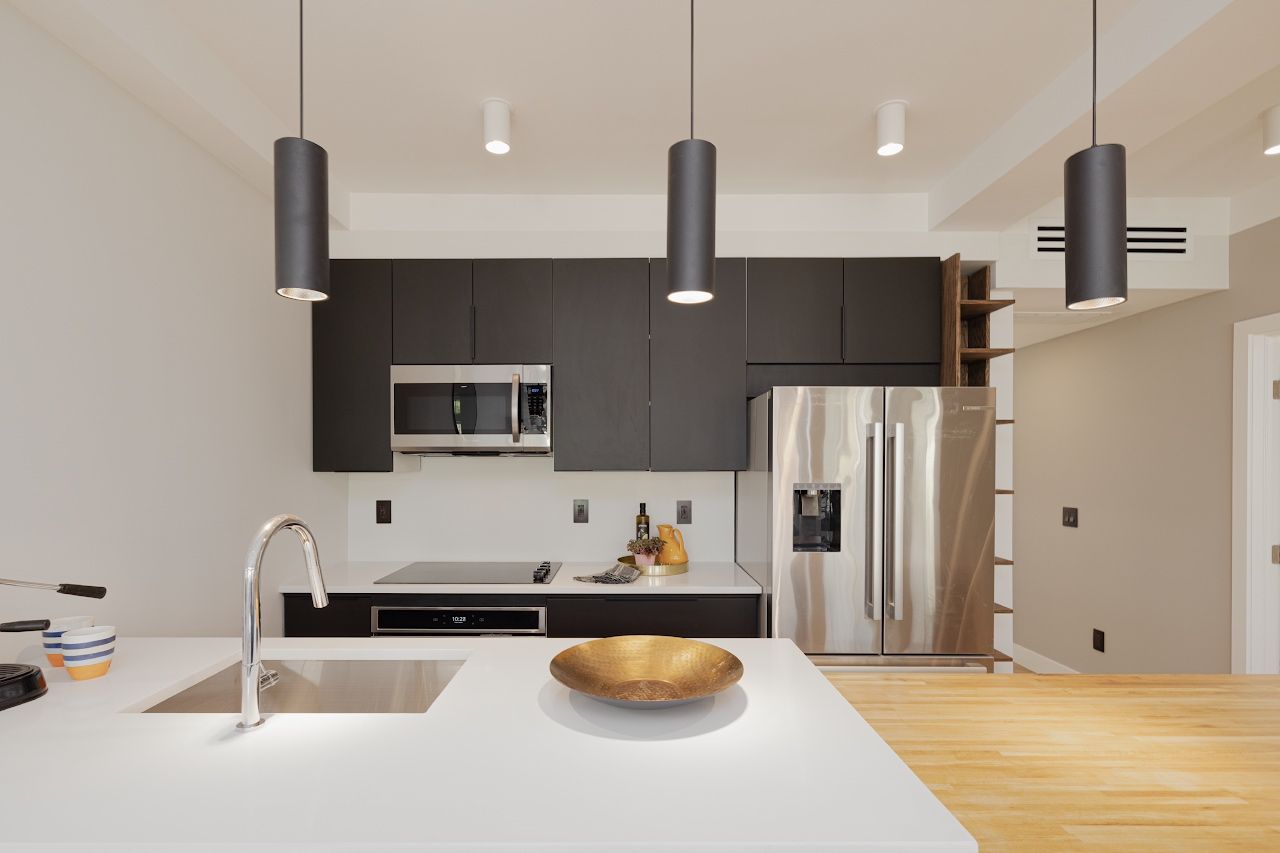
Ducted vs recirculating
| Ducted | Recirculating | |
|---|---|---|
| Removes grease | Yes (filters plus exhaust) | Yes (mesh or baffle filters) |
| Removes moisture and heat | Yes | No |
| Removes combustion gases from gas burners | Yes | No |
| Odor | Removed | Reduced by charcoal filters, which need regular replacement |
| Installation | Needs a duct route to the outdoors | Anywhere |
| Best fit | Houses, top-floor units, buildings with an approved exhaust path | Interior kitchens in apartment buildings, especially with induction |
The EPA recommends an exhaust fan vented to the outdoors over gas stoves, which it lists among the main indoor sources of nitrogen dioxide. If you cook on gas and cannot duct outside, consider switching to induction; see our induction vs gas guide.
Sizing a hood
Capture area first
A hood that covers the cooking surface matters more than raw airflow. Rules of thumb that work:
- Width: at least the width of the cooktop; 3 inches wider on each side is better, and an island hood should overhang more because there is no wall to contain the plume.
- Height: typically 24–30 inches above the cooking surface, within the manufacturer’s range. Higher mounting reduces capture.
- Depth: a deeper hood that covers the front burners captures far better than a slim one.
Airflow (CFM)
- Most home ranges and cooktops: about 250–400 CFM in a well-shaped hood is adequate.
- Gas ranges: a common rule is 100 CFM per 10,000 BTU of total burner output, which pushes high-output ranges well above 400 CFM.
- Induction: a lower rule of thumb applies because there is no combustion; size to the width and cooking style.
- Rated vs actual: long ducts, elbows and undersized transitions reduce real airflow well below the rating.
Makeup air above 400 CFM
An exhaust fan can only remove air that is replaced. In a tight, well-sealed home, a powerful hood depressurizes the house, cuts its own performance, and can pull exhaust gases back down a water heater or furnace flue. The International Residential Code, which New Jersey uses as its code for one- and two-family homes, requires makeup air for kitchen exhaust systems capable of more than 400 CFM where fuel-burning appliances that are not direct-vent or mechanically vented sit inside the dwelling’s air barrier. The makeup air has to be roughly equal to the exhaust rate, with a damper that opens automatically when the hood runs.
In practice, makeup air means a dedicated duct with a motorized damper, sometimes with a heater, interlocked with the hood. It commonly adds $1,500–$5,000 in a house. Many owners choose a 390–400 CFM hood with an excellent capture shape instead. Apartment buildings fall under different code provisions and building rules; your engineer and the building will set the requirements. Always check with your local construction office.
Duct routes
- Size: use the duct diameter the manufacturer specifies (often 6–10 inches); never reduce it.
- Material: smooth rigid metal, sealed joints, no flexible foil duct.
- Length: as short and straight as possible; each elbow reduces airflow.
- Termination: a wall or roof cap with a backdraft damper, never into an attic, soffit or ceiling cavity.
- Plan it early: the duct route determines where the range can go and must be coordinated with joists, cabinets and soffits.
New Jersey houses
Most single-family and two-family homes can duct through an exterior wall or the roof. In rowhouses, the duct often runs through the rear wall; in historic districts such as Jersey City’s downtown districts or parts of Hoboken, a new vent on a visible facade may need historic preservation review. Interior kitchens can run duct through a soffit above the wall cabinets.
NYC apartments
Ventilation is where apartment kitchens differ most from houses:
- Facade penetrations are often prohibited by co-op and condo rules, and in landmarked buildings and historic districts, exterior changes need Landmarks Preservation Commission approval.
- Existing exhaust risers. Some buildings have a kitchen exhaust riser served by a roof fan. You may be allowed to connect a hood without its own blower, or required to use a damper. Never add a powered fan into a shared riser without the building’s approval; it can push odors into neighbors’ apartments.
- Recirculating hoods are the default in many buildings. Choose one with real baffle filters and a replaceable charcoal stage, and replace the charcoal on schedule.
- Through-wall fans near a window are sometimes approved in prewar buildings; the board decides.
Our co-op and condo guide covers how to raise this in an alteration application.
Noise and controls
- Check the sone rating at the speed you will actually use, not just the lowest setting.
- Remote or inline blowers (in the attic, on the roof or in the duct) are much quieter in the kitchen, where the route allows.
- Look for automatic or delayed-off functions and lighting that is bright enough to cook by.
- For efficiency, compare fan wattage at your normal speed; ENERGY STAR certifies residential ventilation fans, and a certified model is a reasonable tiebreaker.
Common mistakes
- Choosing the hood after the cabinets are designed.
- Using an over-the-range microwave as the only ventilation over a gas range.
- A 1,000-CFM hood with no makeup air, or connected to a 6-inch duct.
- Venting into a ceiling or attic.
- Assuming the building will approve a facade vent.
We plan ventilation at the start of every kitchen renovation, before cabinets are drawn.
Frequently asked questions
How many CFM does my range hood need?
For most home ranges, about 250–400 CFM in a hood that fully covers the cooktop is enough. High-output gas ranges are often sized at 100 CFM per 10,000 BTU. Capture area and a good duct matter as much as the rating.
When is makeup air required for a range hood?
Under the International Residential Code used for New Jersey one- and two-family homes, makeup air is required for kitchen exhaust above 400 CFM where the home has fuel-burning appliances that are not direct-vent or mechanically vented. Check with your construction office; apartment buildings follow different provisions.
Are recirculating range hoods any good?
They capture grease and reduce odor with charcoal filters, but do not remove moisture, heat or combustion gases. They are a reasonable compromise in apartments, especially with induction cooking.
Can I vent my range hood outside in a NYC apartment?
Only if your building allows it. Many co-ops and condos prohibit new facade openings, and landmarked buildings need Landmarks Preservation Commission approval for exterior changes. Some buildings permit connection to an existing exhaust riser.
Sources & further reading
- US EPA: Nitrogen dioxide’s impact on indoor air quality
- NJ DCA: Current construction codes adopted in New Jersey
- ENERGY STAR: Ventilation fans
- NYC Landmarks Preservation Commission
Costs are 2026 planning ranges for the New Jersey and New York City market, not quotes. Rules summarized here change and vary by building and municipality; confirm requirements with your local building department, building management or attorney before you start.