Induction vs Gas When Renovating a Kitchen in NJ or NYC: Electrical Capacity, Gas Work and Cost
Induction or gas for your New Jersey or New York City kitchen renovation: cooking performance, electrical service and circuit needs, gas permits, NYC’s all-electric law, ventilation, indoor air and 2026 costs.
Short answer
For most renovations in New Jersey and New York City, induction is the easier and cleaner choice: it heats faster than gas, needs no gas permit or pressure test, and produces no combustion gases indoors. Its requirement is electrical: a dedicated 240-volt circuit, typically 40–50 amps, and enough capacity in the panel and service. Keeping gas in the same location is usually simple; moving or extending a gas line is not, especially in NYC apartment buildings. NYC’s all-electric law applies to new buildings, not to renovating an existing kitchen.
How they compare
| Induction | Gas | |
|---|---|---|
| Speed | Very fast; boils water noticeably quicker | Moderate |
| Low-heat control | Precise, steady simmer | Good on quality burners |
| Cookware | Must be magnetic (cast iron, most stainless) | Any |
| Indoor air | No combustion byproducts | Produces nitrogen dioxide and other combustion gases; needs good venting |
| Kitchen heat | Little waste heat | Heats the room |
| Cleaning | Flat glass surface | Grates and burners |
| Infrastructure | 240V circuit, often 40–50A; panel and service capacity | Gas line, shutoff, permits and tests if altered |
| Power outage | Does not work | Burners can usually be lit manually (check the model) |
What induction needs electrically
An induction range or cooktop typically needs a dedicated 240-volt circuit of about 40–50 amps; check the specific model’s installation instructions. Whether that is easy depends on the building:
- New Jersey houses with 150–200-amp service usually have room for an induction circuit, though a panel may need space or a subpanel. Older houses with 60–100-amp service may need a service upgrade, which involves the utility and adds weeks.
- NYC apartments often have small feeds from the building’s electrical system. Some prewar co-ops have very limited capacity per unit, and the board may need its engineer to approve any increase. Ask the managing agent for the apartment’s service size before you buy appliances.
- Load calculation. Your electrician should run one that includes everything planned: induction, a wall oven, a dishwasher, a microwave, air conditioning and, in some apartments, a washer-dryer.
- Permits. New circuits need an electrical permit in New Jersey and New York City. In New Jersey, electrical work is governed by the electrical subcode, which adopted the 2023 National Electrical Code in August 2026.
Lower-power options exist: 120-volt induction ranges with built-in batteries, and 24-inch or two-burner induction cooktops that need smaller circuits. They can solve tight electrical situations in small NYC kitchens.
What gas involves
- Keeping gas in place. Replacing a range on the existing connection is straightforward and is usually limited to a new flexible connector and shutoff.
- Moving or extending a gas line needs a licensed plumber and a permit in both states, followed by a pressure test and inspection. NYC’s Department of Buildings lists rerouting gas pipes among the kitchen work that requires a permit filed by an engineer or architect.
- Gas shutoffs in NYC buildings. If gas to a building or riser is shut off during work, or a leak is found, restoring service can take a long time because the whole system may need testing and utility sign-off. This is a real risk in older multi-family buildings and one reason many owners choose induction when the kitchen is being redone.
- Co-op and condo rules. Some buildings now restrict new gas work or require it to be done by the building’s plumber.
NYC’s all-electric law: what it does and does not cover
Local Law 154 of 2021 restricts fossil-fuel combustion equipment in new construction in New York City. The Department of Buildings says it applies to applications for new buildings and for major alterations that must be filed as new buildings, with dates phased by building type: January 1, 2024 for buildings under seven stories (excluding service hot water) and July 2, 2027 for all occupancies. A kitchen renovation in an existing apartment or house is not a new building filing, so existing gas cooking can generally stay. Buildings may still choose to restrict gas on their own.
New Jersey has no comparable ban on gas cooking in existing homes.
Indoor air and ventilation
The EPA lists gas stoves among the main indoor sources of nitrogen dioxide and notes that in homes with gas stoves, indoor levels often exceed outdoor levels. It recommends an exhaust fan vented to the outdoors over gas stoves. In practice:
- With gas, a ducted hood vented outside is strongly preferable. If your building allows only a recirculating hood, that is a significant argument for induction.
- Induction does not produce combustion gases, so a recirculating hood is a more reasonable compromise, though cooking itself still produces grease, moisture and particles.
Our range hood guide covers sizing and makeup air.
Cost in 2026
| Item | Typical 2026 planning range |
|---|---|
| New 240V induction circuit, panel has capacity | $800 – $2,500 |
| Panel replacement or subpanel | $2,500 – $6,000 |
| Electrical service upgrade (house) | $4,000 – $12,000+ |
| Gas range swap on existing line | $300 – $800 |
| Relocating or extending a gas line, with permit and test | $1,500 – $6,000+ |
| Capping a gas line when converting to induction | $400 – $1,500 |
Planning ranges, not quotes. Appliance prices are extra; induction ranges and cooktops now overlap gas in price at most levels. NYC buildings with engineer review or building plumbers cost more.
How to decide
- Choose induction if you are moving the cooking area, cannot vent outside, have young children (no open flame, cooler surface), or want to avoid gas work in an older NYC building.
- Keep gas if the range stays in place, you can duct a hood outside, and you value cooking with a wok or charring directly on a flame.
- Either way, confirm electrical capacity first. Even a gas kitchen gains electrical loads in a renovation.
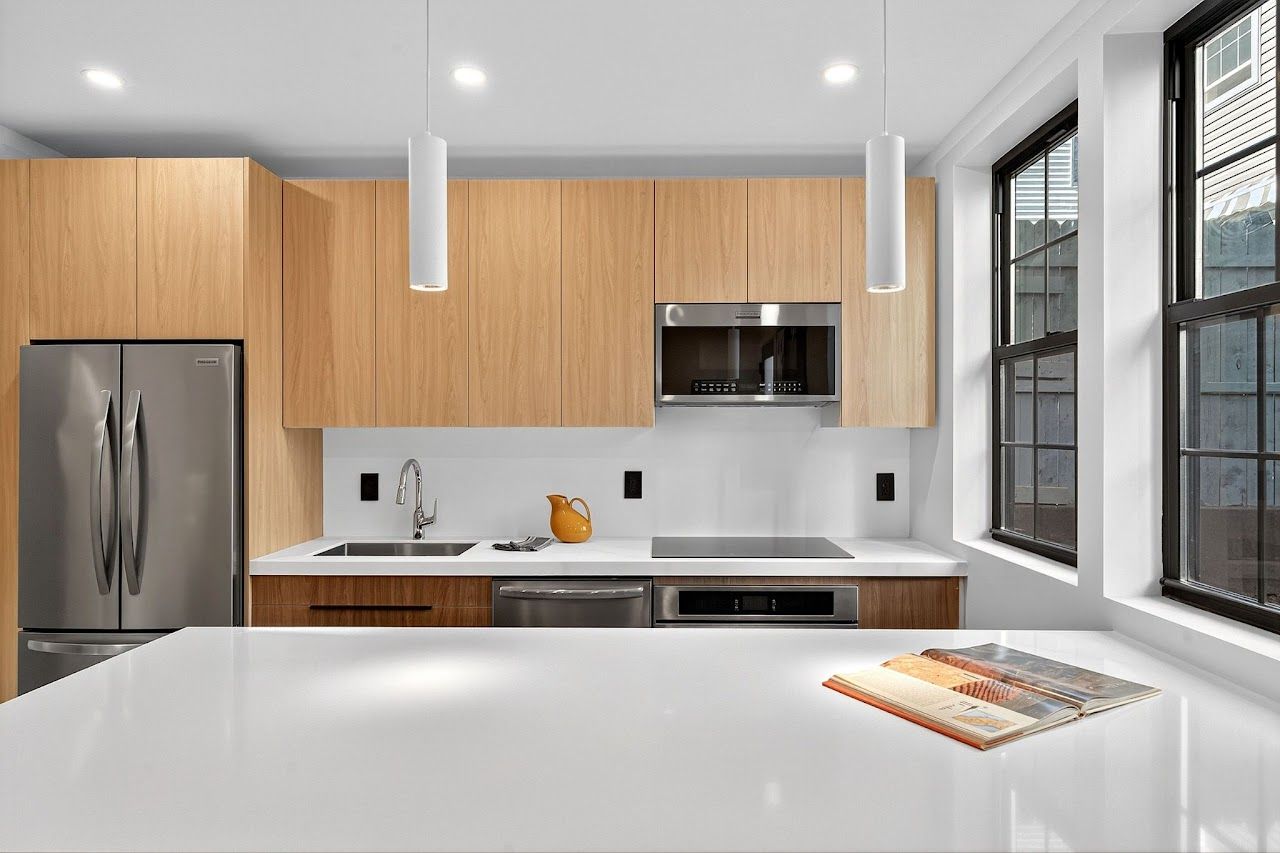
The kitchen we built at 31 Bayview in Jersey City uses an induction cooktop. See our kitchen renovation service.
Frequently asked questions
Does an induction cooktop need a special circuit?
Usually a dedicated 240-volt circuit of about 40–50 amps, depending on the model. Compact and 120-volt battery-assisted models need less. An electrician should check panel and service capacity before you buy.
Is gas being banned in NYC kitchens?
Not for existing kitchens. Local Law 154 of 2021 applies to new buildings and alterations filed as new buildings, phased in from January 1, 2024. Renovating an existing kitchen can generally keep gas, though some buildings restrict it.
Do I need a permit to switch from gas to induction?
Yes in most cases: a new 240-volt circuit needs an electrical permit, and capping the gas line is plumbing work. In NYC, co-ops and condos will also require their own approval.
Is induction better for indoor air than gas?
It produces no combustion byproducts. The EPA lists gas stoves among the main indoor sources of nitrogen dioxide and recommends venting them outdoors. Cooking with any method still produces grease and particles, so a hood is still worthwhile.
Sources & further reading
- NYC Department of Buildings: Local Law 154 building electrification
- NYC Department of Buildings: Renovating kitchens and bathrooms
- US EPA: Nitrogen dioxide’s impact on indoor air quality
- NJ DCA: Current construction codes adopted in New Jersey
Costs are 2026 planning ranges for the New Jersey and New York City market, not quotes. Rules summarized here change and vary by building and municipality; confirm requirements with your local building department, building management or attorney before you start.