Kitchen Flooring: Hardwood vs Engineered Wood vs Tile vs Vinyl in NJ Houses and NYC Apartments
How to choose kitchen flooring in a New Jersey house or New York City apartment: solid hardwood, engineered wood, porcelain tile and luxury vinyl compared on water, wear, sound, subfloor, old-floor removal and 2026 cost.
Short answer
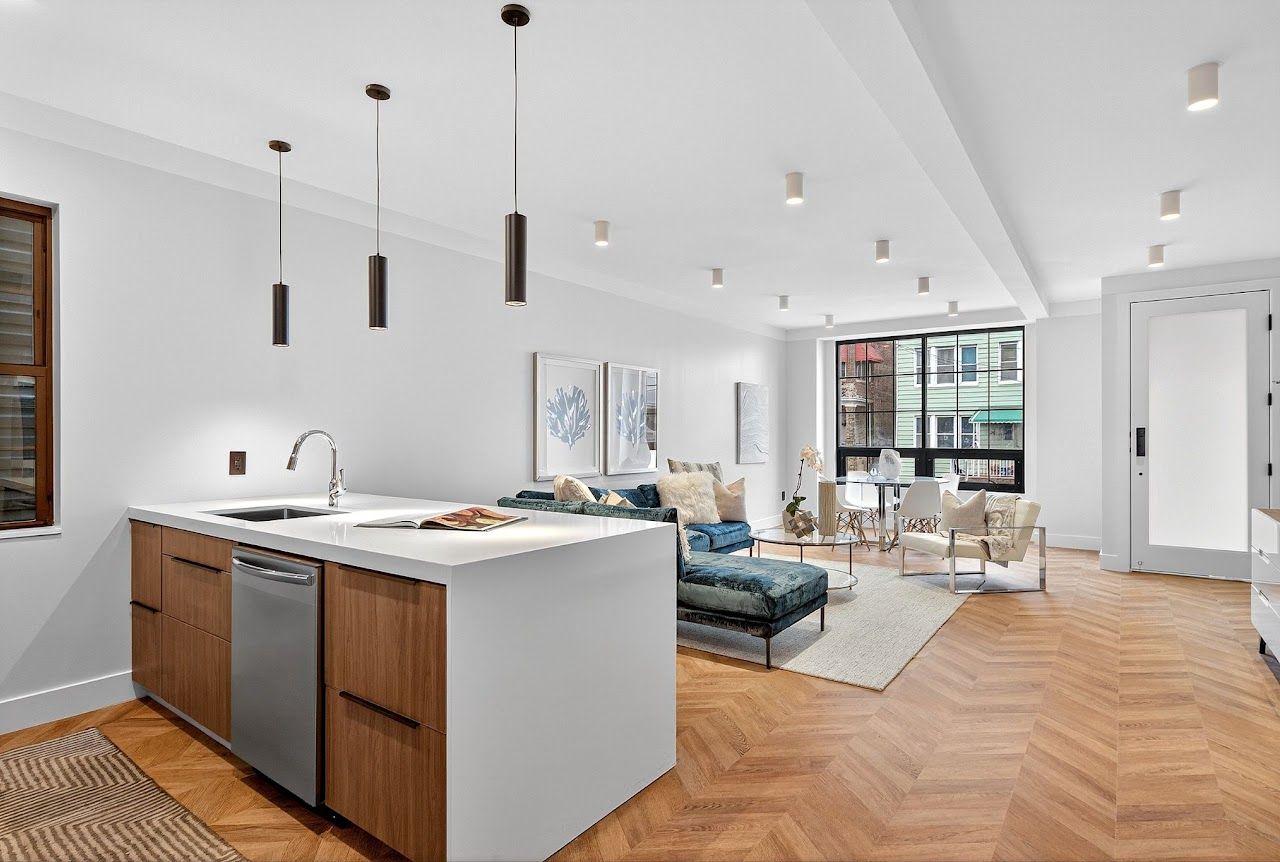
There is no single best kitchen floor; the right one depends on the building. In an open-plan NJ house, continuing the hardwood or engineered wood from the living area usually looks best and suits buyers. In NYC co-ops and condos, engineered wood or porcelain over an acoustic underlayment is common because buildings regulate sound. Porcelain tile is the most water-resistant. In 2026, plan roughly $8–$30 per sq ft installed depending on material and subfloor work.
Decide what the floor has to do
A kitchen floor takes standing water near the sink and dishwasher, dropped pots, chair traffic and constant cleaning. It also has to meet the floors around it at the same height and, in apartments, keep noise from reaching the neighbor below. Before comparing samples, answer four questions:
- Open or closed kitchen? If the kitchen opens to the living room, one continuous floor usually looks better than a change of material at an arbitrary line.
- House or apartment? Co-op and condo buildings often set sound and underlayment requirements; see our guide to NYC co-op and condo renovations.
- What is underneath? Wood joists, a concrete slab and an old layered floor each lead to different choices.
- Floors first or cabinets first? This affects cost, future flexibility and the dishwasher height.
The four main options
| Material | Water | Wear and repair | Best fit | 2026 installed planning range* |
|---|---|---|---|---|
| Solid hardwood (oak, ash, maple) | Tolerates spills wiped promptly; leaks cause cupping | Can be sanded and refinished several times | NJ houses and brownstones on joists, open plans | $10 – $22 / sq ft |
| Engineered wood | Somewhat more stable than solid; still damaged by standing water | Refinishable once or a few times depending on the wear layer | NYC apartments on concrete, radiant heat, wide planks | $10 – $24 / sq ft |
| Porcelain tile | Highly water-resistant | Very hard-wearing; hard underfoot; broken tiles can be replaced if spares are kept | Closed kitchens, homes with pets, slab floors | $14 – $30 / sq ft |
| Luxury vinyl plank or tile (LVP/LVT) | Many products water-resistant at the surface | Scratches and dents; worn planks replaced, not refinished | Rentals, basements, budget refreshes | $7 – $14 / sq ft |
*Material, underlayment, installation and finishing for a typical 100–250 sq ft kitchen. Removal of old flooring, subfloor repair, leveling and high-floor NYC logistics add cost. These are planning ranges, not quotes.
Solid hardwood
Site-finished oak is still the standard in older NJ houses and in many brownstones. Its strength is longevity: when it wears, you sand and refinish rather than replace. In a kitchen, choose a durable finish, keep runners at the sink and fix appliance leaks quickly. Solid wood needs a wood subfloor to nail into, so it is rarely used directly on concrete.
Engineered wood
Engineered flooring has a real wood wear layer over a plywood or composite core. The cross-laminated core moves less with humidity, which makes it the usual choice for wide planks, floors over radiant heat and floors glued or floated over concrete in apartment buildings. Check the wear-layer thickness: thin layers cannot be sanded much. Composite wood cores sold in the US must be certified as compliant with EPA’s formaldehyde emission standards (TSCA Title VI); look for that label.
Porcelain tile
Porcelain is the most water-resistant option and suits closed kitchens, mudroom-kitchen combinations and homes with large dogs. Large-format tiles need a very flat substrate, and tile over wood joists needs a stiff enough floor to avoid cracked tile and grout, so the subfloor often needs reinforcement in older houses. Tile is cold and hard underfoot, which radiant heat solves; see our heated floors guide for the systems.
Luxury vinyl
LVP is the most affordable, quickest to install and forgiving of spills, which is why it is common in rentals. It does not refinish, can dent under appliance feet and does not carry the resale appeal of real wood in most NJ and NYC markets. Rigid-core products still need a flat subfloor and expansion gaps around the edges.
Apartments: sound comes first
In New York City, the Building Code sets sound ratings for floor/ceiling assemblies between dwelling units in new work: STC 50 and IIC 50 in laboratory tests (45 if field tested). Co-op and condo alteration agreements commonly require an approved acoustic underlayment under any hard floor and may require testing or a sample. The underlayment adds height and cost, so include it in the budget and in the threshold planning. Jersey City and Hoboken condo associations often have similar rules in their bylaws. Ask the managing agent for the building’s flooring requirements before you choose a product.
Subfloor, height and thresholds
- Removing old layers: older kitchens often hide two or three floors stacked on each other. Removing them lets the new floor meet the adjoining rooms at the same height.
- Leveling: prewar NYC buildings and older NJ frame houses are rarely flat. Self-leveling compound on concrete or shimming and new plywood on joists is often needed before tile or rigid vinyl.
- Thresholds: a flush transition into the living room looks better and avoids a trip point; plan it when choosing the floor’s total thickness.
- Dishwasher height: if new flooring goes in after the cabinets, make sure the dishwasher can still be pulled out over the raised floor.
Floors first or cabinets first?
Running the floor under the cabinets costs more material but makes future layout changes easier and keeps appliance openings at the same height. Installing cabinets first and flooring to them saves material, which is common with tile. With floating floors, many manufacturers require cabinets to sit on the subfloor rather than on top of the floating floor; follow their instructions. Your contractor should decide this with the cabinet installer during planning, not on site.
Old floors: lead and asbestos
Vinyl floor tiles, sheet-flooring backing and adhesives installed decades ago can contain asbestos. EPA advises not to sand, scrape or dry-grind flooring that may contain asbestos; test it first, and if removal is needed, use qualified professionals. In New York City, building owners are responsible for having an asbestos survey done by a DEP-certified asbestos investigator when work may disturb asbestos-containing material, and building managers commonly ask for that survey before work starts. In homes built before 1978, removing baseboards and painted trim can disturb lead paint, so ask for the contractor’s EPA RRP certification.
Cost and resale
Flooring is usually 5–10% of a kitchen budget. The resale question is mostly about continuity: in Hudson County and NYC listings, a continuous wood floor through an open kitchen and living area photographs well and reads as finished. Tile in a closed kitchen is accepted by buyers; vinyl in an otherwise high-end kitchen often is not. For overall kitchen costs, see our New Jersey and New York City cost guides.
BDM handles flooring as part of a full kitchen renovation, including subfloor repair, acoustic underlayment for building approvals and transitions into the rest of the home. Tell us about your space on the project intake page.
Frequently asked questions
Is hardwood a good idea in a kitchen?
Yes, for most homes. Hardwood and engineered wood handle normal spills if they are wiped promptly, and they can be refinished. Fix leaks quickly and use runners at the sink. Porcelain tile is the better choice where water exposure is heavy.
What flooring is best for a NYC apartment kitchen?
Engineered wood or porcelain tile over an acoustic underlayment the building approves is common. NYC’s Building Code sets sound ratings for floor/ceiling assemblies between units in new work, and co-op and condo alteration agreements often add underlayment requirements.
Should kitchen flooring go under the cabinets?
Running the floor under cabinets costs more but keeps future layouts flexible and appliance openings level. Tile is often installed to the cabinets instead. Floating floors usually should not be trapped under cabinets; follow the manufacturer’s instructions.
How much does kitchen flooring cost in NJ or NYC?
In 2026, plan roughly $7–$14 per sq ft installed for luxury vinyl, $10–$24 for solid or engineered wood and $14–$30 for porcelain tile, before removing old floors or leveling. These are planning ranges, not quotes.
Can old kitchen vinyl tiles contain asbestos?
Older vinyl floor tiles, sheet-flooring backing and adhesives can contain asbestos. Do not sand or scrape them; have them tested, and use qualified professionals if removal is needed.
Sources & further reading
- NYC Building Code 2022, Chapter 12 (Section 1207 Sound transmission)
- US EPA: Formaldehyde emission standards for composite wood products
- US EPA: Protect your family from exposures to asbestos
- NYC DEP: Asbestos abatement and certified investigators
- US EPA: Renovation, Repair and Painting program
Costs are 2026 planning ranges for the New Jersey and New York City market, not quotes. Rules summarized here change and vary by building and municipality; confirm requirements with your local building department, building management or attorney before you start.