Renovating a Rental for Return in NJ and NYC: Rent Premiums, Depreciation and Rent-Regulation Limits
How to judge whether renovating a rental unit pays in New Jersey or New York City: rent premium payback, 27.5-year depreciation, NYC rent-stabilized IAI caps of $30,000 and $50,000, and NJ municipal rent control.
Short answer
A rental renovation pays back through three channels: a higher rent, a tax deduction for depreciation (residential rental improvements are depreciated over 27.5 years, appliances over 5), and a higher building value when the income rises. On market-rate units in Jersey City, Hoboken or Brooklyn, a rental-grade kitchen and bath refresh often pays back in roughly 8–15 years on rent alone, faster once vacancy and value are counted. In a NYC rent-stabilized apartment the rent increase is set by formula: since October 17, 2024 an Individual Apartment Improvement can add 1/168th of its cost to the monthly rent (1/180th in buildings over 35 units), capped at $30,000, or $50,000 in qualifying long-vacant units.
Start with the right question
For your own home, a renovation is judged on comfort plus resale value. For a rental, it is an investment with a measurable return: how much more rent, how much less vacancy and repair, how much tax deduction, and how much more the building is worth. That makes the math simpler and less forgiving. A $25,000 bathroom that a tenant will not pay more for is a cost, not an investment.
The answer also depends on which of three rental situations you are in:
- Market-rate units: most New Jersey two- to four-family houses, condo units rented out, and many small NYC buildings. Rent is set by the market at each new lease, subject to any local ordinance.
- NJ rent-controlled units: New Jersey has no statewide rent control, but municipalities may adopt rent control or rent leveling ordinances enforced by local boards. Several Hudson County cities have them.
- NYC rent-stabilized units: generally apartments in buildings of six or more units built before 1974. Improvement-based increases follow state rules administered by NYS Homes and Community Renewal (HCR).
Market-rate units: the payback math
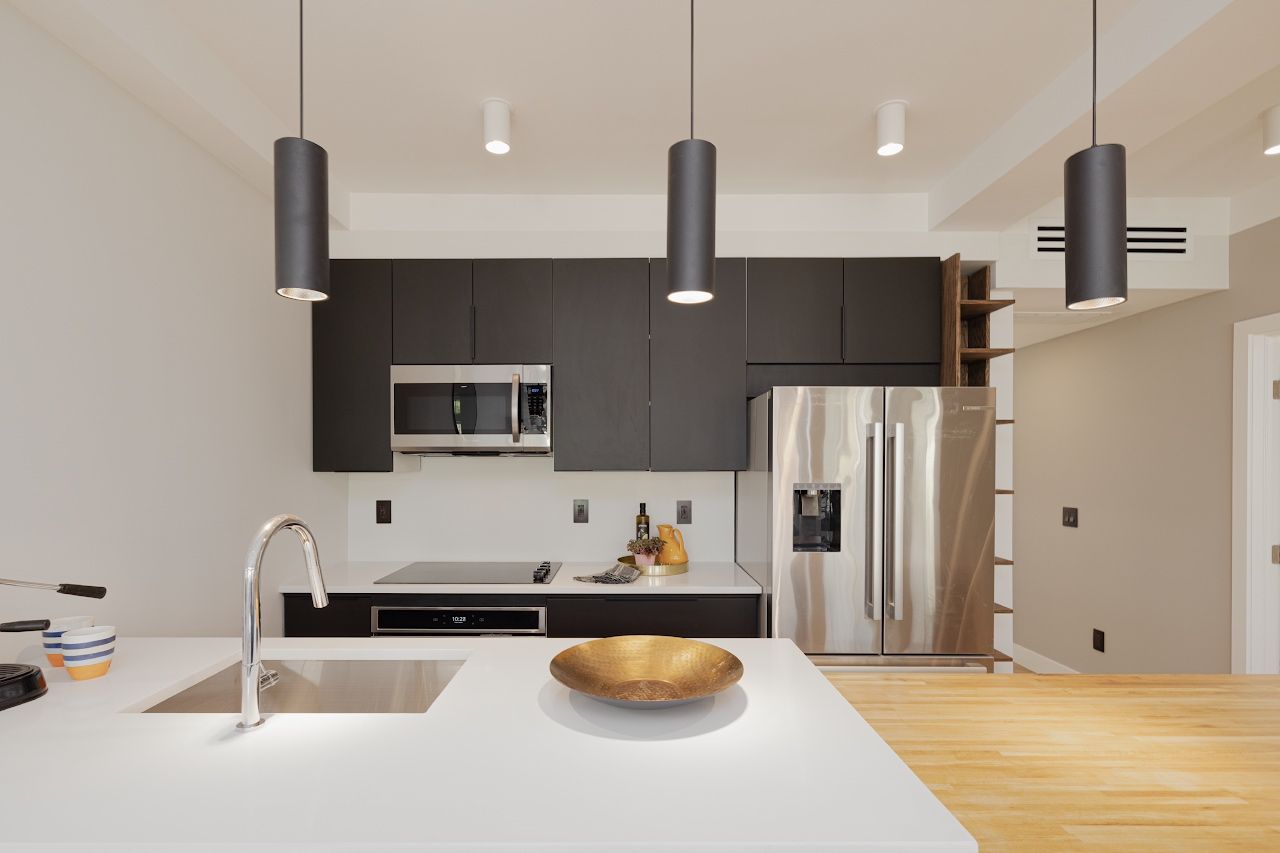
Renovation for a market-rate rental is usually done at turnover, using a durable, consistent finish package. Typical 2026 planning ranges:
| Scope | New Jersey | New York City |
|---|---|---|
| Kitchen refresh (same layout) | $20,000 – $40,000 | $30,000 – $60,000 |
| Full kitchen remodel | $40,000 – $90,000 | $60,000 – $125,000 |
| Bathroom refresh | $10,000 – $20,000 | $15,000 – $30,000 |
| Full bathroom remodel | $20,000 – $40,000 | $30,000 – $55,000 |
A simple test: divide the renovation cost by the extra annual rent it supports. If a $40,000 kitchen and bath refresh on the rental floor of a Jersey City two-family lets you lease at $300 more per month, that is $3,600 a year, a simple payback of about 11 years. The same work supporting $450 more per month pays back in about 7.5 years. Ask a local leasing broker what comparable renovated units actually lease for before you commit; asking rents on listing sites overstate it.
Rent premium is only part of the return:
- Vacancy. Renovated units in Hudson County and Brooklyn usually lease faster. One month less vacancy on a $3,500 unit is worth $3,500, every turnover.
- Repairs. New supply lines, shutoffs, waterproofed showers and tile instead of painted drywall cut the service calls and leaks into the unit below that eat into net income.
- Tenant quality and tenure. Hard to price, but landlords consistently report fewer problems in units that are well finished.
Depreciation: the tax side of the return
For a rental, the IRS treats repairs and improvements differently (Publication 527). Repairs that keep the unit in working order are generally deductible in the year paid. Improvements, meaning work that betters, restores or adapts the property, are capitalized and depreciated. Under the general system, residential rental property is depreciated over 27.5 years, while appliances, carpeting and furniture used in a rental are 5-year property.
Roughly, a $36,000 kitchen renovation (excluding $4,000 of appliances) produces about $1,300 a year of depreciation deductions, and the appliances are written off over five years, generally on an accelerated schedule. At a combined marginal rate of 35%, that is several hundred dollars a year of tax saved, which shortens the payback. Exact first-year amounts depend on the month placed in service and on your tax situation, and depreciation is generally recaptured when you sell. In an owner-occupied two-family, only the rental unit’s share of the work is depreciable. Confirm the split and treatment with your accountant; see our guide to renovation tax deductions.
Building value: why income matters more than finishes
Two- to four-family houses are usually appraised by comparable sales, so a renovated rental unit raises value mainly by making the house compare well. Buildings of five or more units are often valued on income. There, each dollar of added annual net income is worth many dollars of value. As an illustration only: if renovations raise net operating income by $7,200 a year and buyers in the area price similar buildings around a 6% capitalization rate, that is roughly $120,000 of value. Cap rates vary by location, building and interest rates; use a local broker’s figure, not this one.
New Jersey rent control: check the town first
New Jersey leaves rent control to municipalities. Jersey City, Hoboken, Bayonne, West New York, Union City and many other North Jersey towns have ordinances with annual increase limits and, in many cases, a process for landlords to apply to the rent leveling board for a capital improvement increase or surcharge. The rules differ by town on which buildings are covered (many exempt small owner-occupied buildings), how improvements are recovered, over how many years, and what notice tenants must receive.
State law exempts newly constructed multiple dwellings from local rent control for 30 years after completion. Before you budget a renovation around a higher rent in an older building, get the ordinance and the board’s application requirements from your city’s rent leveling office. If the unit is covered, the renovation may still make sense for durability and vacancy, but the rent increase will be limited and paperwork-driven. For the construction rules that apply to every NJ rental (permits, lead-safe certificate, smoke and CO certificate), see renovating a rental unit in New Jersey.
NYC rent-stabilized apartments: the IAI rules
An Individual Apartment Improvement (IAI) is an improvement inside a rent-stabilized or rent-controlled apartment, such as a new kitchen or bathroom, that can raise the legal regulated rent. HCR’s revised Operational Bulletin 2024-2 sets out the current rules, effective October 17, 2024:
| First tier | Second tier | |
|---|---|---|
| Who qualifies | Rent-stabilized or rent-controlled apartments generally | Vacant units timely registered vacant for 2022, 2023 and 2024, or vacant after 25+ years of continuous occupancy |
| Recoverable cost cap | $30,000 | $50,000 |
| Monthly increase, 35 or fewer units | 1/168th of cost | 1/144th of cost |
| Monthly increase, over 35 units | 1/180th of cost | 1/156th of cost |
| Permanent? | Yes | Yes |
At the caps, that is about $179 a month for a first-tier $30,000 IAI in a smaller building and about $347 a month for a second-tier $50,000 IAI. Because a well-specified NYC kitchen or bathroom often costs more than the cap, part of the work will not be recoverable through rent.
The paperwork is strict. For every IAI, owners file a notification form with an itemized list of work and before-and-after photos through HCR’s online owner system; in an occupied apartment, the tenant’s written informed consent is required. Second-tier IAIs add steps: certification of eligibility from HCR before work, notice immediately before starting with evidence the work is needed because of a substandard condition or end of useful life, an affirmation of no harassment or willful overcharge findings in the past five years, and after completion, itemized invoices, proof of payment and a fee. Keep every invoice and cancelled check: overcharge complaints are decided on documentation. Owners should review the bulletin with counsel before planning work.
A rental scope that earns its keep
- Spend on what tenants see and what fails: kitchen counters and fronts, lighting, bathroom tile and fixtures, flooring, in-unit laundry where the building allows it.
- Spend on what prevents claims: waterproofing membranes, new shutoffs and supply lines, GFCI and AFCI protection, smoke and CO alarms.
- Standardize: one cabinet line, one tile, one faucet family across units makes repairs and future turnovers cheaper.
- Skip: custom millwork, natural marble, specialty appliances and anything that needs owner-level care.
For a two-family or small building, it often pays to price several units at once. Our New Jersey and New York City teams can scope a repeatable turnover package and give you the cost per unit to plug into your numbers.
Frequently asked questions
How long does it take for a rental kitchen renovation to pay back?
On a market-rate unit, divide the cost by the extra annual rent it supports. A $40,000 kitchen and bath refresh that adds $300 a month pays back in about 11 years on rent alone; lower vacancy, fewer repairs and depreciation shorten that.
How much can a NYC landlord raise a rent-stabilized rent after a renovation?
Under the rules effective October 17, 2024, a first-tier IAI adds 1/168th of the cost per month in buildings with 35 or fewer units (1/180th above 35), with recoverable cost capped at $30,000. Qualifying long-vacant units can recover up to $50,000 at 1/144th or 1/156th. Increases are permanent.
Can I deduct a rental kitchen renovation in one year?
Generally no. A new kitchen is an improvement, depreciated over 27.5 years for residential rental property, with appliances depreciated over 5 years. Repairs that only keep the unit in working order are generally deductible in the year paid.
Does New Jersey have statewide rent control?
No. New Jersey leaves rent control to municipalities, many of which in Hudson County have ordinances. Some allow capital improvement increases through the local rent leveling board. New multiple dwellings are exempt for 30 years after construction.
Do I need tenant consent for an IAI in an occupied NYC apartment?
Yes. If a tenant is in occupancy, no IAI rent increase is recoverable without the tenant’s written informed consent, filed with HCR along with the notification form.
Sources & further reading
- NYS HCR: Revised Operational Bulletin 2024-2, Individual Apartment Improvements
- NYS HCR: Apartment (IAI) and building (MCI) improvements
- IRS Publication 527: Residential Rental Property
- IRS Publication 946: How To Depreciate Property
- NJ DCA: Truth in Renting (rent control is municipal)
Costs are 2026 planning ranges for the New Jersey and New York City market, not quotes. Rules summarized here change and vary by building and municipality; confirm requirements with your local building department, building management or attorney before you start.