Jersey City Bathroom Renovation Cost (2026): Rowhouses, Two-Families and High-Rise Condos
What a bathroom renovation costs in Jersey City in 2026: ranges by scope, how downtown rowhouses, Heights two-families and waterfront high-rises differ, permits, historic districts and timeline.
Short answer
In 2026 a Jersey City bathroom renovation typically costs $10,000 – $20,000 for a powder room or cosmetic refresh, $20,000 – $40,000 for a full remodel with new tile, shower or tub and fixtures, and $45,000 – $85,000+ for a primary bath with a new layout or luxury finishes. Where a project lands in those ranges depends mostly on the building: an old rowhouse or frame two-family carries more hidden plumbing and framing work, while a high-rise condo carries more building requirements. Carry a 10–20% contingency, at the high end in pre-1940 buildings.
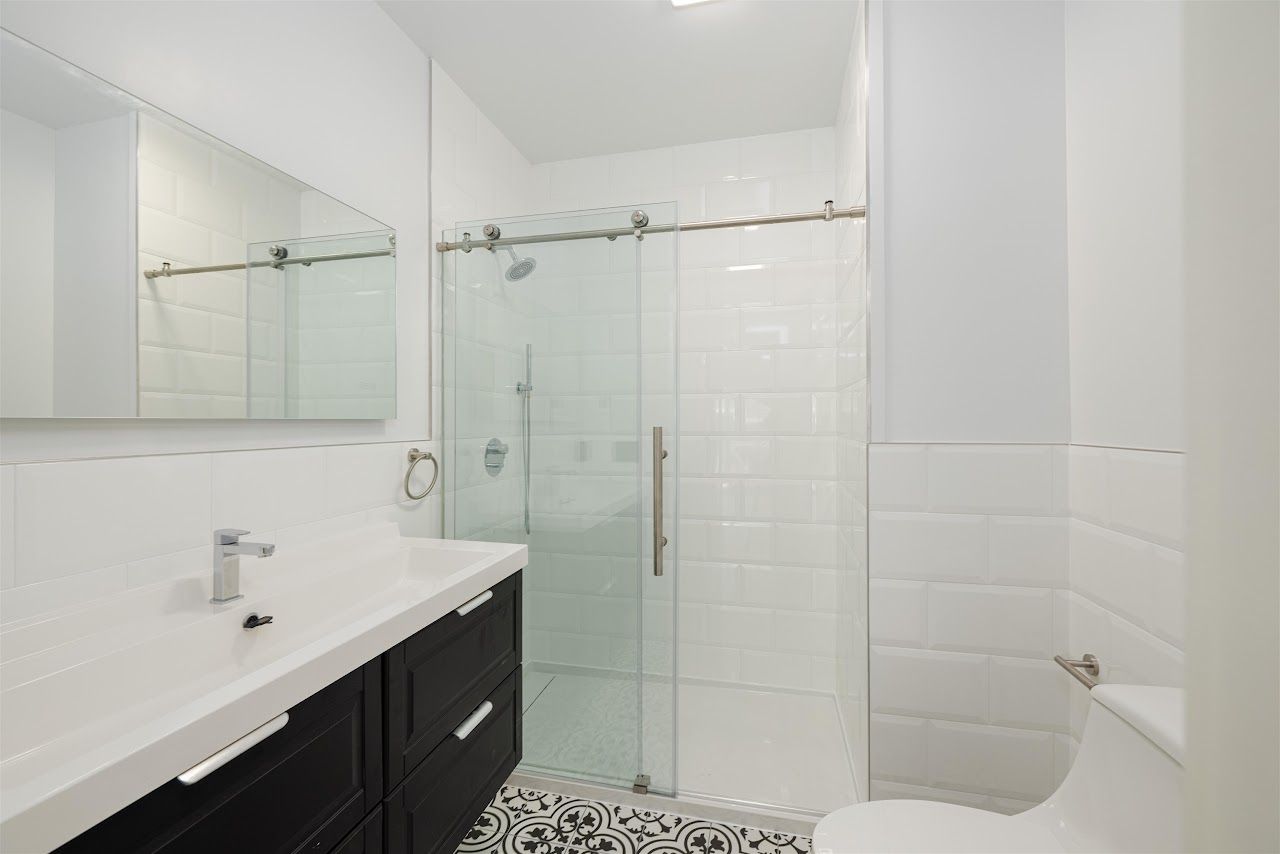
2026 Jersey City bathroom renovation costs by scope
We use one set of planning ranges for New Jersey so our numbers agree from page to page. Jersey City projects fall across the whole range; the building type decides where.
| Scope | 2026 planning range |
|---|---|
| Powder room or cosmetic refresh | $10,000 – $20,000 |
| Full remodel (new tile, shower/tub, vanity, fixtures) | $20,000 – $40,000 |
| Primary bath with layout change or luxury finishes | $45,000 – $85,000+ |
Planning ranges, not quotes. Typical bathroom of 35–80 sq ft. Excludes design fees and condo association fees.
For a line-by-line breakdown of where bathroom money goes (demolition, plumbing, waterproofing, tile, glass, vanity) see our New Jersey and NYC bathroom cost guide. This page covers what is specific to Jersey City.
Jersey City’s three main building types
Jersey City is not one housing market. A bathroom in a Paulus Hook brownstone, a two-family in the Heights and a tower on the waterfront are three different jobs, even with identical tile.
Downtown brick and brownstone rowhouses
Hamilton Park, Van Vorst Park, Harsimus Cove and Paulus Hook are lined with 19th-century masonry rowhouses, many now split into condos. Bathrooms here were usually added long after the house was built, often squeezed into a former hall bedroom or the end of a parlor floor.
- Floors. Joists have frequently been notched for old drain lines. Before a tile floor goes down, the subfloor has to be flat and stiff enough not to crack grout, which can mean sistering joists and adding plywood.
- Cast-iron and galvanized piping. Expect to replace old galvanized supply lines and, in many cases, a section of cast-iron drain or stack. In a condo conversion the stack is shared, so that work is coordinated with the association.
- Historic districts. Much of downtown is inside a local historic district. That rarely changes the inside of a bathroom, but it affects any new window, exterior vent or rooftop equipment, and adds an approval step (see below).
Frame two- and three-families in the Heights, Greenville and the West Side
Wood-frame multi-family houses are the most common owner-occupied homes outside downtown. Bathrooms are usually stacked one above the other, which keeps plumbing simple if fixtures stay put.
- Rot and leaks. Decades of failed tub caulk and grout often mean rotted subfloor or joist ends under the tub. We price that as an allowance because nobody can see it until the floor is open.
- Two units, one renovation. If the owner rents the other unit, plan around the tenant’s water service and access. Older rental units also bring lead-paint rules into play (see below).
- Ventilation. Many of these bathrooms rely on a window and have no exhaust fan. Adding a fan ducted to the outside is one of the best-value upgrades in a full remodel.
Waterfront and Journal Square high-rise condos
Newport, Exchange Place, the Paulus Hook waterfront and the newer towers around Journal Square have modern framing, straight walls and predictable plumbing. Construction is easier; the building is harder.
- Association approval with drawings, the contractor’s New Jersey registration and insurance certificates naming the association and managing agent.
- Work rules: limited hours, freight elevator bookings, protection of halls and elevators, debris removal rules.
- Shut-downs and risers. Isolating water to a bathroom may require the building’s staff, and some buildings charge for each shut-down.
- Acoustic and waterproofing standards for floors over a neighbor’s unit, sometimes with a flood test before tile goes down.
Our Jersey City and Hoboken condo guide walks through the approval package step by step.
Jersey City cost adders to plan for
These items explain most of the gap between two bids for the same-looking bathroom. Figures are 2026 planning ranges.
| Item | When it applies | Typical 2026 range |
|---|---|---|
| Subfloor and joist repair under tub or toilet | Older rowhouses and frame houses with past leaks | $1,500 – $8,000 |
| Replacing galvanized supply or a section of cast-iron drain | Pre-1960 buildings | $2,000 – $7,000 |
| New ducted exhaust fan with exterior termination | Bathrooms with only a window | $800 – $2,500 |
| Moving a toilet or shower drain more than a few feet | Layout changes, especially across joists | $3,000 – $10,000+ |
| Building requirements: protection, elevator, shut-downs, certificates | Managed condo buildings | $1,000 – $5,000 |
| Lead-safe work practices and cleanup | Disturbing paint in pre-1978 homes | $500 – $3,000 |
Not every bathroom has every adder. A waterfront condo rarely needs joist work; a two-family rarely has an elevator booking.
Permits in Jersey City
Jersey City’s Division of Construction Code, at the City Hall Annex at One Jackson Square, administers the New Jersey Uniform Construction Code and takes permit applications through the city’s online permitting portal. For bathrooms:
- Like-for-like replacement of a vanity, toilet or sink in the same location is generally ordinary maintenance under N.J.A.C. 5:23-2.7 and does not need a permit.
- A full remodel that replaces supply and drain piping, rebuilds a shower, adds a fan circuit or changes walls typically needs plumbing, electrical and sometimes building permits, with inspections before walls close and at the end.
- Who pulls the permit. Permits are generally pulled by a contractor registered with the NJ Division of Consumer Affairs, or by an owner working on their own single-family home. Plumbing work is generally performed under a New Jersey licensed master plumber. BDM’s NJ Home Improvement Contractor registration is #13VH12961700.
The statewide rules, including what counts as ordinary maintenance, are in our New Jersey permit guide.
Historic districts: an extra step downtown
Jersey City has five local historic districts: Hamilton Park, Harsimus Cove, Paulus Hook, Van Vorst Park and West Bergen–East Lincoln Park. The city states that development, alteration, rehabilitation or repair of a property in a district or a landmark needs a Certificate of No Effect (generally issued by staff) or a Certificate of Appropriateness (generally from the full Historic Preservation Commission) before work starts, whether or not a construction permit is required. Applications are filed through the same city portal.
For a bathroom that only changes the interior, this is usually a staff-level matter, but it still takes time and has to come before the building permit. A new window, a fan or vent through a front facade, or rooftop equipment can need full commission review. If your home is in a district, contact the city’s historic preservation staff before design is finished.
Lead paint in older homes and rentals
Most Jersey City housing was built before 1978, so assume painted surfaces may contain lead. Contractors disturbing paint in pre-1978 homes must follow the EPA’s Renovation, Repair and Painting rule: certified firm, containment and specialized cleanup. If you own a rental unit, New Jersey separately requires periodic lead-based paint inspections of most pre-1978 rental dwellings under N.J.A.C. 5:28A, so coordinate renovation timing with your inspection and tenant turnover.
Flood zones
Parts of Jersey City, including sections of downtown and the waterfront, are in FEMA flood hazard areas. A single upstairs bathroom will not change that, but a garden-level bath or a whole-house renovation can. Check your address on FEMA’s Flood Map Service Center, use flood-tolerant materials below grade, and ask the construction office how flood rules apply before a large project is finalized.
Timeline
A full bathroom remodel in Jersey City usually takes 3–5 weeks of construction. Before that, allow 2–6 weeks for design, selections, association approval, any historic district certificate and permits, longer if tile, glass or a custom vanity has a long lead time. Primary baths with a layout change commonly run 6–8 weeks on site.
How to keep a Jersey City bathroom on budget
- Keep the toilet and shower drain where they are. In stacked two-families and condo conversions this is the biggest saving available.
- Ask for allowances on hidden work. Subfloor repair and pipe replacement priced as unit costs let you compare bids honestly.
- Get building rules and historic status in writing first. They affect schedule as much as cost.
- Spend on what you cannot redo later: waterproofing, drain slope, ventilation and a solid floor. Fixtures can be upgraded later; a leaking shower pan cannot.
- Use the NJ capital improvement exemption. A full bathroom renovation usually qualifies; giving your contractor a completed Form ST-8 keeps the labor free of sales tax.
BDM builds in Jersey City: we developed 33 Bayview (2023) and 31 Bayview (2025) in Jersey City, including their bathrooms. See our bathroom renovation service or our New Jersey service area.
Frequently asked questions
How much does a bathroom renovation cost in Jersey City?
In 2026, roughly $10,000 – $20,000 for a powder room or cosmetic refresh, $20,000 – $40,000 for a full remodel and $45,000 – $85,000+ for a primary bath with a layout change or luxury finishes. Older rowhouses and frame houses tend to need more hidden repair; high-rise condos carry more building requirements.
Do I need a permit to remodel a bathroom in Jersey City?
For a full remodel, usually yes: replacing piping, rebuilding a shower or adding circuits needs plumbing and electrical permits from the Division of Construction Code. Replacing a vanity, toilet or sink in the same spot is generally ordinary maintenance and does not.
Does a Jersey City historic district affect an interior bathroom renovation?
It can. The city requires a Certificate of No Effect or a Certificate of Appropriateness before work on a property in a historic district, whether or not a construction permit is required. Interior-only work is generally a staff-level review, but exterior vents or new windows may go to the full commission.
How long does a bathroom renovation take in Jersey City?
Typically 3–5 weeks of construction for a full remodel, plus 2–6 weeks beforehand for design, approvals and permits. Primary baths with layout changes often take 6–8 weeks on site.
Why is my Jersey City bathroom quote higher than a suburban one?
Older buildings often hide rotted subfloors, galvanized pipe and cast-iron drains, and condo buildings add insurance, elevator, shut-down and protection requirements. Ask bidders to list these items separately so you can compare.
Sources & further reading
- City of Jersey City: Division of Construction Code
- City of Jersey City: Historic Preservation
- N.J.A.C. 5:23-2.7: Ordinary maintenance under the Uniform Construction Code
- NJ Division of Consumer Affairs: Home Improvement Contractors
- NJ DCA: Lead-Based Paint Inspections in Rental Dwelling Units
- US EPA: Renovation, Repair and Painting Program
- FEMA Flood Map Service Center
- NJ Division of Taxation: Form ST-8, Certificate of Exempt Capital Improvement
Costs are 2026 planning ranges for the New Jersey and New York City market, not quotes. Rules summarized here change and vary by building and municipality; confirm requirements with your local building department, building management or attorney before you start.