Renovating to Sell in Hudson County: Which Kitchen and Bath Upgrades Pay Off
Which kitchen and bathroom upgrades make sense before selling a home in Jersey City, Hoboken, Bayonne or elsewhere in Hudson County: what buyers notice, what to skip, permits and resale certificates, budgets and timing.
Short answer
Before selling in Hudson County, the upgrades that usually pay off are the ones buyers see in photos and the ones their inspector would otherwise flag: a kitchen refresh (typically $20,000 – $40,000 in New Jersey), a bathroom refresh ($10,000 – $20,000), paint, lighting and floors, plus fixing leaks, wiring and open permits. Full custom kitchens and layout changes rarely return their cost on a sale within a year or two. Also plan for the paperwork: New Jersey requires a smoke alarm, carbon monoxide alarm and fire extinguisher certificate from your municipality before a one- or two-family home is sold.
What Hudson County buyers notice
Buyers in Jersey City, Hoboken, Weehawken, Bayonne and Union City are often comparing your home to new-construction condos with fresh kitchens and baths. They notice:
- Kitchens that look dated in listing photos: oak or cherry cabinets, tile or laminate counters, old appliances, dim lighting.
- Bathrooms with stained grout, old tub surrounds or cracked tile.
- Floors: worn carpet or mismatched flooring between rooms.
- Signs of deferred maintenance: water stains, soft floors near a toilet, old electrical panels, ungrounded outlets.
- In rowhouses and two-families, basement condition and water, especially in flood-prone parts of Hoboken and Jersey City.
Upgrades that usually pay off
Kitchen refresh, not a new kitchen
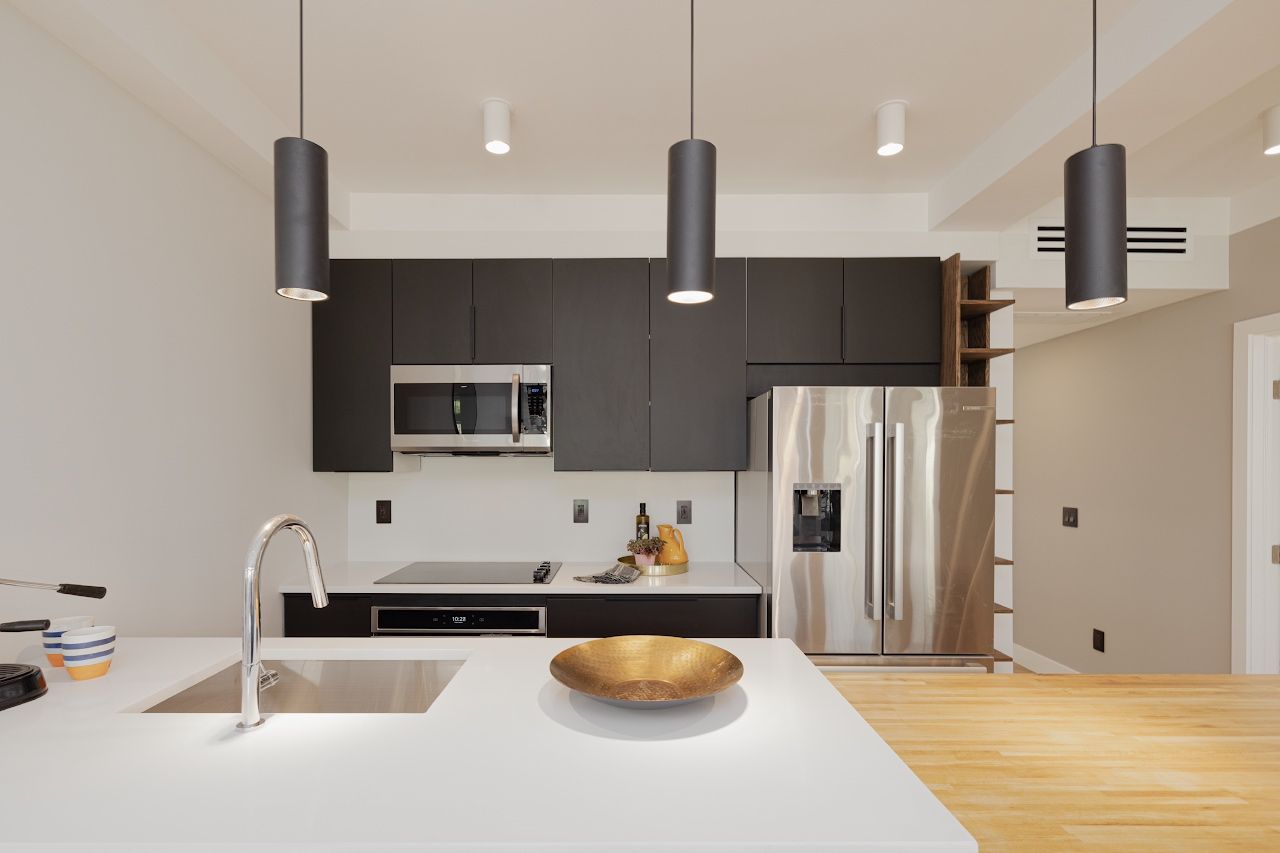
If the cabinet boxes are sound and the layout works, replace or paint the cabinet fronts, install new quartz counters and a simple backsplash, update the sink, faucet and lighting, and buy a matching stainless appliance package. This changes the listing photos without paying for layout changes the next owner may not want. See our NJ kitchen cost guide.
Bathroom refresh
New vanity, mirror, lighting, toilet and faucet, regrouted or reglazed tile where it is sound, and a new tub surround or tile where it is not. Replacing a dated tub-shower combination in the main bath is often worth it; a full primary-bath reconfiguration usually is not. See our Jersey City bathroom cost guide.
Paint, lighting and floors
Neutral paint throughout, new light fixtures and refinished hardwood or new consistent flooring are the highest-return items in most homes, and they cost a fraction of a kitchen.
Fix what an inspector will find
Leaks, rot around tubs and toilets, double-tapped breakers, missing GFCI protection in kitchens and baths, and broken windows give buyers leverage to renegotiate. Fixing them before listing is usually cheaper than the credit a buyer will ask for.
What usually does not pay off before a sale
- Custom cabinetry, natural stone and premium appliance packages. Buyers rarely pay full value for someone else’s taste.
- Moving walls, plumbing or gas. Layout changes need engineering, permits and time, and they push the listing date out.
- Additions and finished basements started just before listing, especially in flood zones where below-grade work faces extra rules.
- Highly personal finishes: bold tile, colored fixtures, specialty lighting.
Typical pre-sale budgets
| Package | What it includes | Typical cost |
|---|---|---|
| Cosmetic | Paint, lighting, hardware, floor refinishing, repairs | $8,000 – $25,000 |
| Kitchen refresh | Fronts or paint, counters, backsplash, sink, faucet, appliances, lighting | $20,000 – $40,000 |
| Bathroom refresh (per bath) | Vanity, toilet, fixtures, mirror, lighting, tile repair or surround | $10,000 – $20,000 |
| Full kitchen remodel | New cabinets, stone, appliances, same footprint | $40,000 – $90,000 |
Kitchen and bathroom ranges match our New Jersey cost guides; cosmetic package is a 2026 planning range. Hudson County typically sits toward the top of each range.
Permits, open permits and resale certificates
- Permits for the work. New Jersey’s Uniform Construction Code requires permits for most alterations; new electrical circuits and moved plumbing need subcode permits even in a refresh. Cosmetic work such as painting and like-for-like fixture replacement can fall under ordinary maintenance. See our NJ permit guide.
- Close out open permits. Old permits that were never finaled, from your work or a previous owner’s, commonly surface during the buyer’s attorney review and can delay closing. Ask your construction office for the property’s permit history early.
- Smoke, CO and extinguisher certificate. Since January 1, 2019, New Jersey has required a certificate of smoke alarm compliance from the municipality before any person sells, leases or changes occupancy of a one- or two-family dwelling, and the state's certification form also covers carbon monoxide alarms and a portable fire extinguisher. It is valid for six months, so time it to your closing. Renovation work is also a natural moment to bring alarms up to current requirements.
- Certificates of occupancy. Rules vary by town. Jersey City, for example, states that it does not issue new certificates of occupancy for the buying and selling of property; other municipalities have their own resale inspections. Ask your town early.
- Condos. Association approval is needed for any renovation, and some associations have their own resale requirements.
Timing
A cosmetic package takes 2–4 weeks. A kitchen refresh takes 3–6 weeks on site, plus lead time for counters and appliances. Start 2–3 months before you want listing photos, and do not start anything you cannot finish before the listing goes live: an unfinished kitchen hurts more than a dated one.
A builder’s view on selling vs renovating
If you plan to stay five years or more, renovate for yourself. If you are selling within a year, keep it to repairs, a refresh and presentation. In between, a full remodel that keeps the existing layout is the usual compromise. We are happy to walk the house with you and your agent and price the options side by side. See our New Jersey renovation page.
Frequently asked questions
Should I renovate my kitchen before selling in Jersey City or Hoboken?
Usually a refresh is the better bet: new fronts or paint, quartz counters, backsplash, lighting and appliances on the existing layout. Full custom kitchens and layout changes rarely return their cost on a near-term sale.
What certificates do I need to sell a house in New Jersey?
For a one- or two-family home, a certificate of smoke alarm, carbon monoxide alarm and fire extinguisher compliance from your municipality, valid for six months. Some towns also have their own resale inspections; Jersey City states it does not issue resale certificates of occupancy.
Do open permits affect a home sale in NJ?
They can. Permits that were never closed out often come up during attorney review or title work and can delay closing. Check your property's permit history with the construction office before listing.
How much should I spend on renovations before selling?
Many Hudson County sellers spend $8,000–$25,000 on cosmetic work and repairs, plus a kitchen or bathroom refresh if those rooms look dated. Ask your agent which rooms comparable listings have updated.
Sources & further reading
- NJ DCA: Smoke alarm certificate required for sale of one- and two-family homes
- NJ Division of Fire Safety: Smoke, CO alarm and extinguisher certification form
- Jersey City: Construction code inspections and certificates
- N.J.A.C. 5:23-2.14: Construction permits, when required
- N.J.A.C. 5:23-2.7: Ordinary maintenance
Costs are 2026 planning ranges for the New Jersey and New York City market, not quotes. Rules summarized here change and vary by building and municipality; confirm requirements with your local building department, building management or attorney before you start.